Post-Menopause: Muscle Becomes One of Your Greatest Health Investments
PLEASE NOTE: My goal is to help you better understand your body through education. The information shared in these Q&A articles is for informational purposes only and should not replace advice from your physician or other qualified healthcare provider. As research continues to grow, recommendations and scientific understanding may change over time. I encourage you to do your own research, ask questions, and work with a healthcare professional to determine what's best for your unique situation.
Strength helps you stay independent, capable, and active for the things you love.
Carrying groceries in from the car. Getting down on the floor to play with a grandchild — and getting back up. Hiking a favorite trail, gardening all afternoon, traveling without worrying whether you can keep up.
These everyday moments all depend on one thing: muscle.
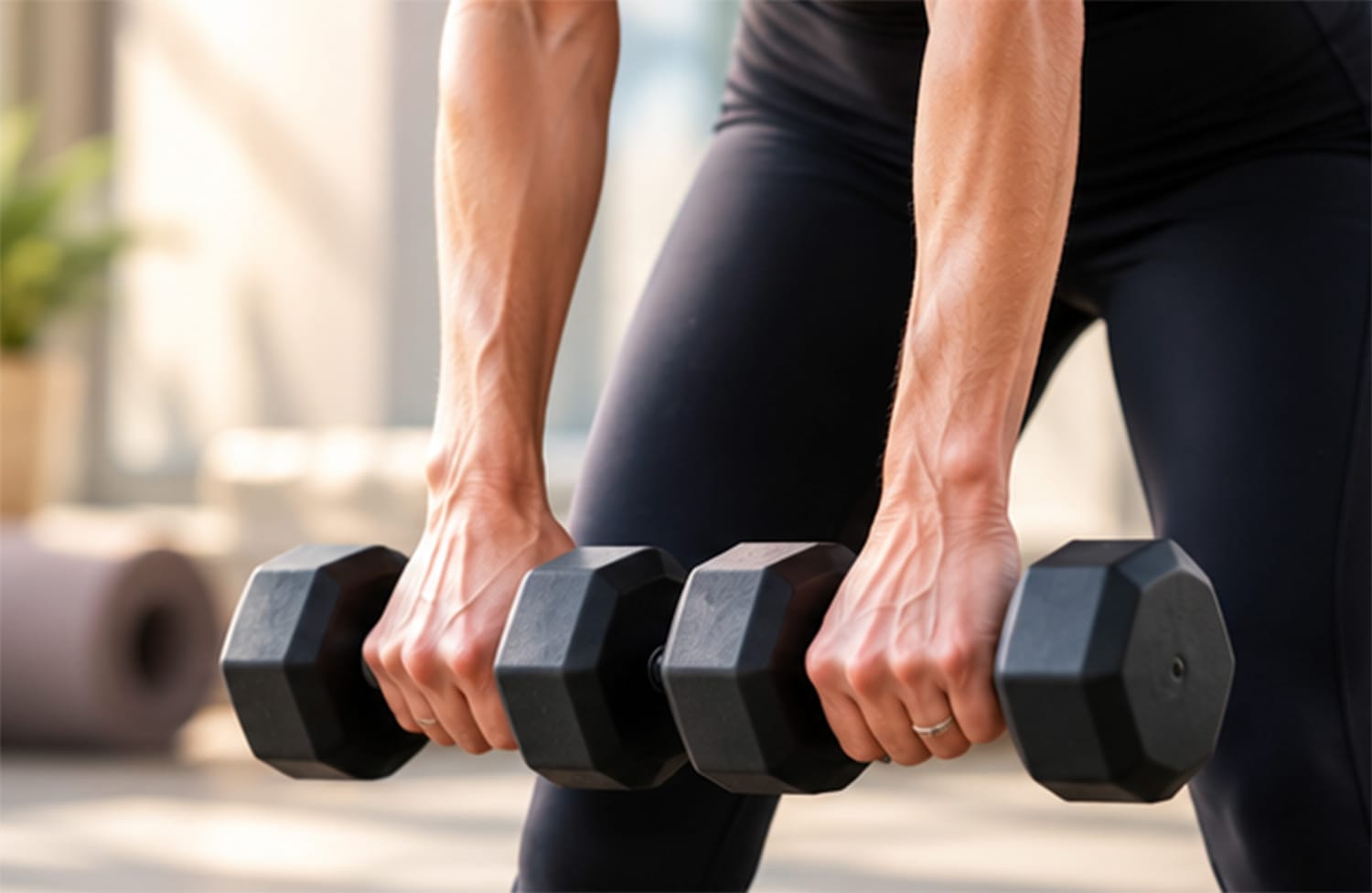
After menopause, muscle becomes one of the most valuable things you can build and protect. It shapes how well you move, how steady you feel on your feet, and how independent you stay in the years ahead. And no matter where you're starting from, it can be built.
What Happens to Muscle After Menopause
Everyone slowly loses some muscle and strength with age. This is called sarcopenia. [1]
For women, menopause can speed this up. Estrogen helps protect and maintain muscle, and researchers believe the drop in estrogen is one of the main reasons muscle declines around this time. [1][2]
A study from Finland followed 234 women from perimenopause into early post-menopause. Over that transition, the women lost measurable muscle — including in the legs and thighs, the muscles you rely on to walk, climb stairs, and stand up from a chair. [3] Other research suggests this loss may begin even earlier, during late perimenopause. [2]
The same Finnish study found something hopeful, too: women who were more physically active held on to more of their muscle. [3] Hormones play a role, but your daily habits do too.
It's Never Too Late to Build Strength
Many women worry they've missed their window, or that lifting weights isn't safe after a certain age. Research says otherwise.
In an Australian study called LIFTMOR, 101 post-menopausal women with low bone density (average age 65) did supervised strength training twice a week, for just 30 minutes at a time, over eight months. [5]
Compared with women doing a gentler home program, the strength-training group improved bone density in the spine and hip, along with physical function. [5] Their back and leg strength also improved by about 40%, which helped their posture and lowered their fall risk. [6] The researchers reported no injuries under supervision. [5]
You don't need to train the way these women did to benefit. But it shows that the body can still respond, grow stronger, and protect itself well after menopause. Starting at any age counts.
What You Can Do
You don't need a gym membership or an intense program. Small, steady habits add up.
Strength train at least two days a week. The CDC recommends muscle-strengthening activities on two or more days a week that work all the major muscle groups: legs, hips, back, abdomen, chest, shoulders, and arms. [7] Bodyweight moves like sit-to-stands from a chair, wall push-ups, and step-ups are a great place to start. Resistance bands and light weights come next.
Start where you are and build slowly. Choose a weight or movement that feels challenging by the last few repetitions, but still lets you keep good form. As it gets easier, add a little more.
Include protein at every meal. Muscle needs protein to repair and grow. Experts who reviewed protein needs in older adults found they need more than younger adults to maintain muscle and function, and even more when they are active. [8] Eggs, fish, chicken, Greek yogurt, beans, lentils, and tofu are all good options.
Practice balance. Balance training is recommended as part of weekly activity to help prevent falls. [4] Standing on one foot while holding the counter, or walking heel to toe, are simple ways to start.
Keep walking. The CDC also recommends about 150 minutes a week of moderate activity, like brisk walking. [7] Walking pairs well with strength work and is easy to fit into daily life.
Make rest part of the plan. Muscles grow stronger during recovery, not just during the workout. Rest days and good sleep matter.
If you're new to strength training, have joint concerns, or have been told you have low bone density, a physical therapist or qualified trainer can help you start safely.
When to Talk With a Provider
It's a good idea to talk with your healthcare provider before starting a new exercise routine if:
You have heart concerns, high blood pressure, or another ongoing health condition
You've been diagnosed with osteoporosis or low bone density, or have had a recent fracture
You have new, sharp, or lasting joint pain
You feel chest pain, dizziness, or unusual shortness of breath during activity — stop and get checked promptly
You'd like a bone density scan (DEXA) to know your starting point
You can also ask your provider whether your protein needs differ because of your kidney health or other conditions.
The Takeaway
Muscle naturally declines with age, and menopause can speed that up.
Staying active helps women hold on to more muscle through this transition.
Muscle supports independence, balance, bone strength, and steadier energy.
Strength training, protein at every meal, balance practice, and walking are simple places to start.
It's never too late — your body can still grow stronger after menopause.
A question to sit with: What do I want to still be strong enough to do ten years from now?
Educational Disclaimer
This article is for educational and informational purposes only. It is not intended to diagnose, treat, cure, or prevent any disease or medical condition, and it is not a substitute for professional medical advice. Always speak with a qualified healthcare provider about your individual needs, before starting a new exercise routine or making dietary changes, and especially if you are taking medication or managing another health condition. If something feels urgent, please seek medical care right away.
Sources
Research on menopause, estradiol, and muscle: Menopause, estradiol, and skeletal muscle protein breakdown. PubMed Central.
Research on muscle mass across the menopause transition: Skeletal muscle mass across the stages of the menopause transition. PubMed Central.
Juppi HK, et al. Role of Menopausal Transition and Physical Activity in Loss of Lean and Muscle Mass: A Follow-Up Study in Middle-Aged Finnish Women. Journal of Clinical Medicine, 2020.
Cedars-Sinai. Exercise and Older Adults.
Watson SL, et al. High-Intensity Resistance and Impact Training Improves Bone Mineral Density and Physical Function in Postmenopausal Women With Osteopenia and Osteoporosis: The LIFTMOR Randomized Controlled Trial. Journal of Bone and Mineral Research, 2018.
Reuters Health, via Gulf Times. Resistance training safe for women with osteoporosis.
Centers for Disease Control and Prevention. How Much Physical Activity Do Older Adults Need? (archived).
Bauer J, et al. Evidence-Based Recommendations for Optimal Dietary Protein Intake in Older People: A Position Paper From the PROT-AGE Study Group. Journal of the American Medical Directors Association, 2013.

LOOKING FOR MORE PERSONALIZED SUPPORT?
You Don't Have to Figure It All Out Alone
If you've been trying to make sense of changing symptoms, energy, hormones, nutrition, or other wellness concerns, a conversation can help you organize what you're noticing and identify where you may want to focus next.
Start with a complimentary 20-minute connection call.
Let's see whether working together feels like the right fit.

Nat's Wellness Journey is a space for approachable wellness education, practical resources, and real-life learning to help women better understand their bodies and make informed choices about their health.
💌 natalie@natswellnessjourney.com
Credential & Certifications





© 2026 Nat's Wellness Journey. All Rights Reserved
Privacy Policy | Terms of Use | Disclosure | Health Disclaimer