Protect Your Quality of Life: How to Care for Your Sexual Health, Bladder, Sleep, Relationships, Purpose, and Well-Being

PLEASE NOTE: My goal is to help you better understand your body through education. The information shared in these Q&A articles is for informational purposes only and should not replace advice from your physician or other qualified healthcare provider. As research continues to grow, recommendations and scientific understanding may change over time. I encourage you to do your own research, ask questions, and work with a healthcare professional to determine what's best for your unique situation.
Sexual health, bladder health, sleep, relationships, purpose, and mental well-being all matter.
Strong bones, a healthy heart, and capable muscles keep your body going. But living well is about more than numbers on a chart. It's waking up rested. Feeling comfortable in your own body. Laughing without worrying about leaks. Enjoying closeness with your partner. Knowing your days have meaning, and feeling at peace in your own mind.
These are the things that make life feel like your life — and they're worth protecting just as much. This guide walks you through each one, step by step, with simple, practical things you can do on your own terms.
Why Quality of Life Deserves Protection
Some of the changes after menopause are quiet and easy to dismiss. Vaginal and urinary changes affect about half of post-menopausal women [1], yet many women assume they just have to live with them. Loneliness and lack of purpose rarely get talked about at checkups, but research links both to real health outcomes — including heart health and longevity. [8][10]
This guide covers six areas of quality of life:
Sexual health — comfort, desire, and closeness
Bladder health — confidence and control
Sleep — rest that restores you
Relationships — connection that fills you up
Purpose — a reason to get up in the morning
Mental well-being — peace and steadiness in your own mind
You don't need to work on all six at once. Start with the one that feels most important to you right now.
Part One: Sexual Health
Step 1: Care for Vaginal Comfort
Lower estrogen can leave vaginal tissue thinner, drier, and more easily irritated. Common signs include dryness, burning, itching, and discomfort during intimacy. [1] These changes tend to continue or slowly increase if left alone, so caring for them early makes a difference. [3]
Use a vaginal moisturizer regularly. Moisturizers are used a few times a week — not just before intimacy — to keep tissue comfortable day to day. [2]
Use a lubricant during intimacy. Lubricants reduce friction in the moment. You can use moisturizers and lubricants together. [2]
Choose gentle products. The Menopause Society advises avoiding flavored lubricants. [2] Many women find simple, fragrance-free products gentlest. Water-based and silicone-based lubricants are both widely available — try a few to see what feels best.
Be gentle with sensitive tissue in daily life. Wash with warm water or a mild, unscented cleanser, skip douches and scented sprays, and choose breathable cotton underwear.
Step 2: Keep Intimacy Alive
Your sexual health is about more than physical comfort. Desire is shaped by sleep, stress, mood, body image, and how connected you feel to your partner. Changes in these areas can affect self-esteem and closeness, which is why they deserve real attention. [3]
Talk about it. Tell your partner what's changed and what you need. A simple start: "My body is changing, and I want us to figure this out together."
Slow down. Your body may need more time to warm up than it used to. Give it that time without pressure.
Widen your definition of intimacy. Touch, kissing, massage, and time together all build closeness, with or without intercourse.
Notice what you're bringing to the moment. Exhaustion and stress dampen desire. Better sleep and calmer days often help more than you'd expect.
Strengthen your pelvic floor (see Step 3). Pelvic floor exercises can strengthen weak muscles and relax ones that are too tight, and a pelvic floor physical therapist can guide you. [2]
Part Two: Bladder Health
Bladder changes — urgency, leaking when you laugh or sneeze, getting up at night, or repeat bladder infections — are common after menopause, but they aren't something you simply have to live with.
Step 3: Strengthen Your Pelvic Floor
Your pelvic floor is a hammock of muscles that supports your bladder, uterus, and bowel. Daily pelvic floor exercises, also called Kegels, strengthen these muscles and can help keep urine from leaking when you sneeze, cough, lift, laugh, or feel a sudden urge. [4]
How to do a Kegel:
Find the right muscles. Imagine you're trying to stop passing gas, or holding back urine. The muscles you squeeze and lift are your pelvic floor. Squeezing the muscles around the rectum also strengthens the ones around the vagina and under the bladder. [6]
Start lying down. It's easiest to feel the muscles this way at first. [6]
Squeeze and lift those muscles, hold for a few seconds, then fully relax for the same amount of time. Work up to holding for 5 seconds. [6][14]
Breathe normally. Keep your stomach, thighs, and buttocks relaxed — only the pelvic floor should work.
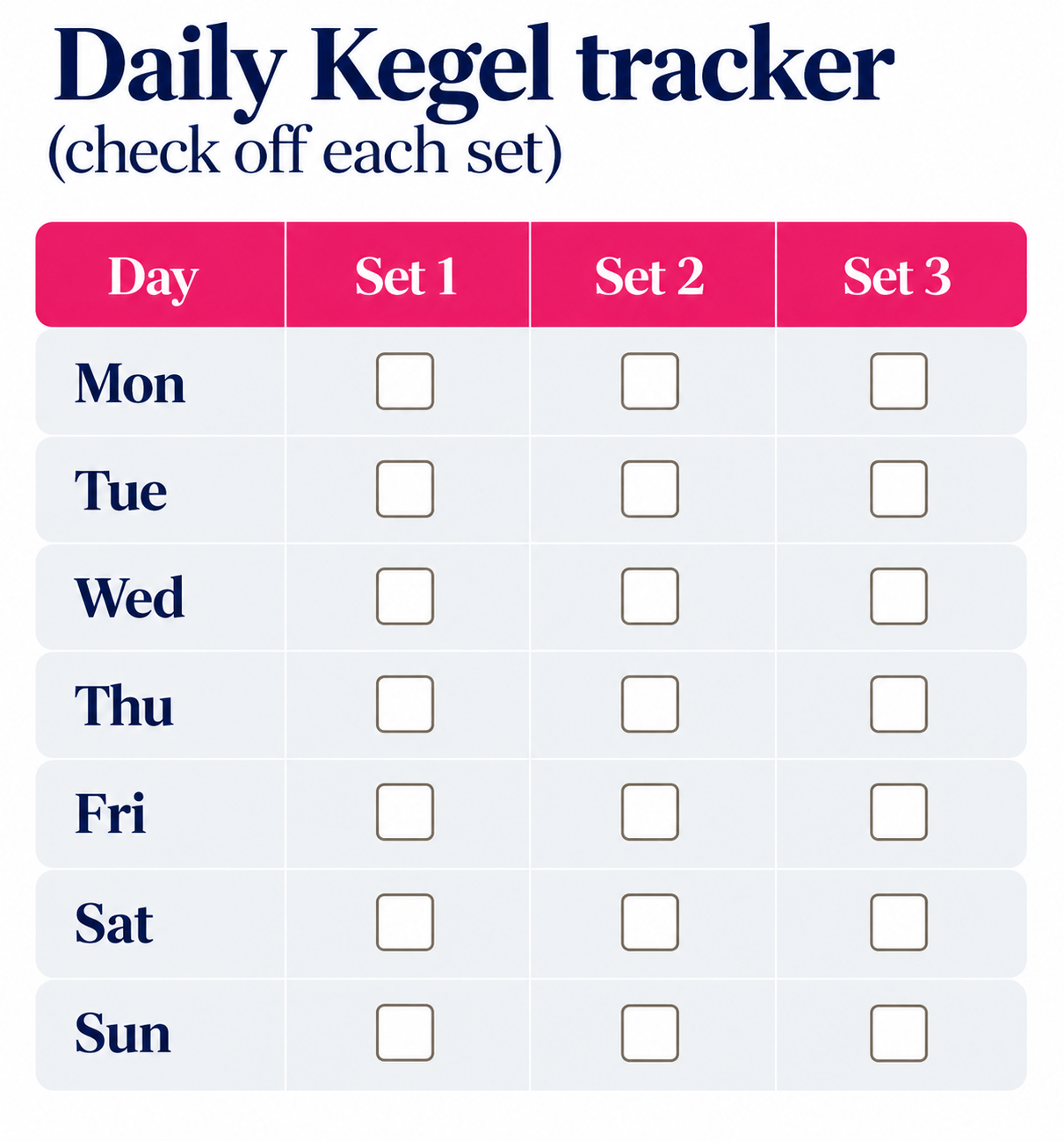
Repeat about 10 times per set, and do a set three or four times a day. [5]
Tips for success:
Don't practice by stopping your urine flow regularly — this may interfere with emptying your bladder. [6]
Once it feels easy lying down, practice sitting and then standing.
Try a quick squeeze right before you cough, sneeze, or lift something heavy.
Leave yourself reminders — a note on the bathroom mirror or a phone alarm. [14]
Give it time. Your pelvic muscles strengthen over time with steady practice, and urgency or frequency may ease as they do. [6]
If you're not sure you're using the right muscles, a pelvic floor physical therapist can help you learn them. [2]
Step 4: Build Bladder-Friendly Habits
Drink enough — mostly water. It's tempting to drink less to avoid bathroom trips, but concentrated urine can irritate the bladder. Most healthy people do well with about six to eight 8-ounce glasses of fluid a day, and water is the best choice for bladder health. [4]
Notice your bladder irritants. Some drinks and foods can make urgency worse:
Caffeine — coffee, tea, and cola [4][5]
Carbonated drinks, even without caffeine [5]
Artificial sweeteners [6]
Alcohol [4]
Citrus juices like orange or grapefruit for some women [6]
Try cutting back on possible irritants for about a week to see if your symptoms improve. [5] If you drink a lot of caffeine, taper down slowly to avoid headaches. [6]
Retrain your bladder. If you feel like you're always running to the bathroom, bladder training can help. [5] Start by going on a schedule — for example, every hour during the day — then slowly stretch the time between trips by 15 to 30 minutes every few days. [14] When an urge hits early, pause, take a slow breath, and do a few quick Kegels until it passes.
Empty fully and don't hold it too long. Holding urine too long can weaken your bladder muscles and make infections more likely. Take your time, sit relaxed, and let your bladder empty completely. [4]
Lower your risk of bladder infections: [4]
Wipe from front to back.
Urinate shortly after sex to flush away bacteria.
Keep things moving. Staying active and avoiding constipation also help prevent bladder problems. [4]
Part Three: Sleep
Step 5: Protect Your Rest
Sleep touches every other part of this guide. A rested body has more patience, more desire, steadier moods, and more energy for the people and things you love. Aim for 7–9 hours a night. [7]
Daily rhythm:
Keep a steady wake time, even on weekends.
Get daylight in the morning, and move your body during the day.
Give caffeine an early curfew — ideally before early afternoon.
Evening wind-down:
Spend 20–30 minutes winding down: dim lights, set screens aside, stretch, read, pray, or breathe slowly.
Write down tomorrow's to-dos or worries so your mind can let them go.
Keep your bedroom cool, dark, and quiet.
If your bladder wakes you at night:
Taper fluids in the two to three hours before bed, while drinking well earlier in the day. [14]
Skip caffeine and alcohol in the evening — both stimulate the bladder. [14]
Empty your bladder right before bed.
Keep a clear, well-lit path to the bathroom to prevent falls.
The Protect Your Heart and Metabolic Health guide in this series goes deeper on sleep habits.
Part Four: Relationships
Step 6: Nurture Connection
Connection isn't a luxury. In 2023, the U.S. Surgeon General issued an advisory calling loneliness and isolation a public health concern, linking them with higher risk of heart disease, stroke, dementia, and early death. [9] People with poor social relationships had a 29% higher risk of heart disease and a 32% higher risk of stroke. [8]
This season of life often reshapes relationships — children leave home, careers shift, parents need more care, friendships change. That makes intentional connection more important than ever.
With your partner:
Share what you're experiencing. Most partners don't know what menopause and post-menopause feel like unless you tell them.
Schedule unhurried time together — a walk, a meal, a weekly date at home.
Ask each other: What do you need from me right now?
With friends and family:
Reach out first. Send the text, make the call, set the coffee date.
Build in regular rhythms — a weekly phone call, a monthly dinner, a walking buddy.
Talk to other women in this season. Hearing "me too" is powerful.
In your community:
Join a faith community, small group, class, club, or volunteer team.
Say yes to invitations, even when it's easier to stay home.
Protect your energy, too. Not every relationship is life-giving. It's okay to invest more in the people who fill you up, and step back from the ones that consistently drain you.
Part Five: Purpose
Step 7: Live With Purpose
Purpose isn't just a nice feeling — it may be good for your health. A 2019 study of nearly 7,000 adults over 50 found that those with the strongest sense of purpose were less likely to die during the study period, especially from heart and circulatory conditions. [10] Those with the lowest purpose scores were about twice as likely to have died as those with the highest. [11] (The study shows a link, not proof that purpose causes longer life. [10])
Researchers suggest people with a stronger sense of purpose may handle stress better and recover from it more quickly. [10] And purpose looks different for everyone — community, relationships, spirituality, kindness, and achievement can all feed it. [12]
Ways to explore and grow your purpose:
Reflect. Ask yourself: What matters most to me now? When do I feel most like myself? What do I want the next chapter to hold?
Serve. Volunteering is one of the most suggested ways to build purpose. [12] Mentor a younger woman, help at church, tutor, or support a cause you care about.
Learn something new. Take a class, pick up an instrument, start the business idea, or finally write the book.
Use your hard-won wisdom. You've lived through a lot. Sharing what you've learned with others is a powerful kind of purpose.
Nurture your spirit. Prayer, scripture, meditation, or quiet time in nature can deepen your sense of meaning. Research suggests practices like meditation and yoga may help build life purpose. [12]
Start small. Purpose doesn't have to be a grand mission. Caring for a grandchild, tending a garden, or encouraging a friend all count.
Part Six: Mental Well-Being
Step 8: Care for Your Mind and Heart
Post-menopause can bring a new sense of steadiness for many women. It can also carry grief, identity shifts, caregiving stress, and lingering low moods. Both are normal, and both deserve care.
Move your body. Regular exercise can relieve insomnia, ease anxiety and depression, and improve thinking ability. [13] Even a daily walk counts.
Calm your nervous system. A few minutes a day add up:
Slow breathing — in for four counts, out for six to eight
Time outdoors and in natural light
Prayer, meditation, or a gratitude practice
Gentle stretching or yoga
Feed your mood. Regular, balanced meals with protein and fiber help keep blood sugar — and mood — steadier. Limiting alcohol helps too, since it can disrupt both sleep and mood.
Name what you feel. Journaling or talking with someone you trust helps you process what's changing instead of carrying it alone.
Set gentle boundaries. Saying no to what drains you makes room for rest, joy, and the things that matter most.
Make room for joy. Schedule things that light you up — music, creativity, laughter, time with people you love — not as a reward, but as part of caring for yourself.
Reach out for support when you need it. A counselor, pastor, support group, or trusted friend can walk alongside you. Needing support is a sign of self-respect, not weakness.
Make It Yours
Step 9: Do a Monthly Quality of Life Check-In
Once a month, take ten quiet minutes to check in with yourself. Rate each area from 1 (struggling) to 5 (thriving), and choose one small step for the month ahead.
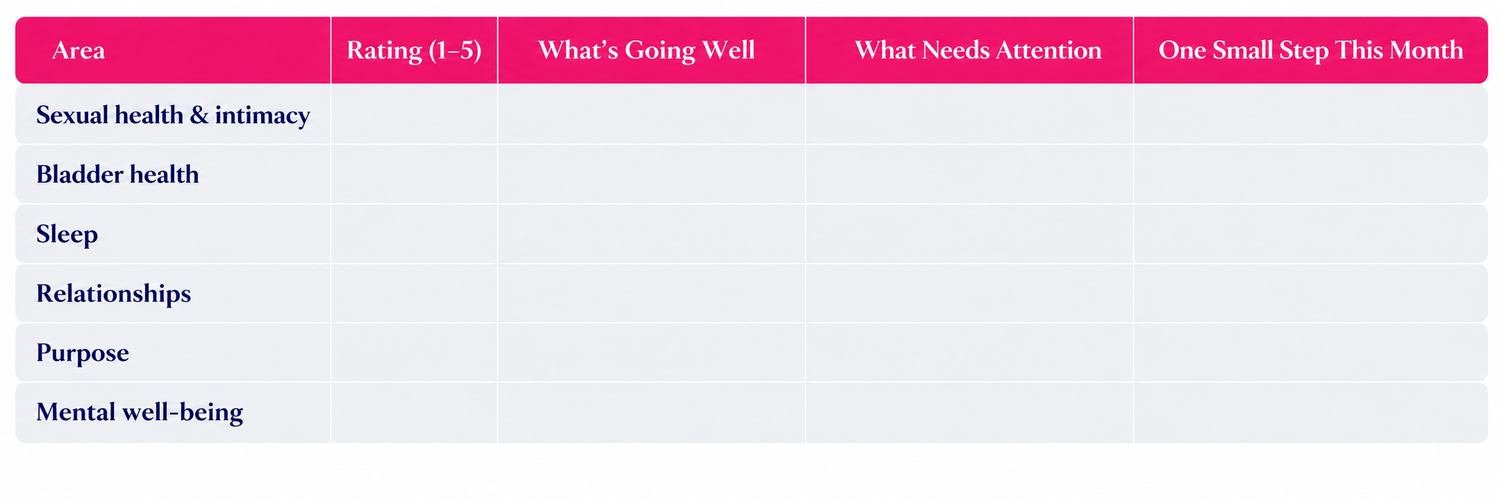
Over a few months, you'll start to see which areas are growing, and where a little more care could make the biggest difference.
Listen to Your Body
You know yourself best. These steps can do a lot, and it's also wise to recognize when you'd benefit from more support.
Worth a closer look:
Dryness, burning, or pain during intimacy that doesn't improve after a few weeks of moisturizers and lubricants
Any vaginal bleeding after menopause — this should always be checked promptly
Bladder infections that keep coming back, burning with urination, or blood in your urine
Leaking or urgency that's limiting your daily life
A feeling of pressure, heaviness, or bulging in your pelvis
Exhaustion that sleep doesn't fix, or loud snoring and gasping at night
Low mood, hopelessness, or loss of interest in things you used to enjoy that lasts most days for two weeks or more
If you're having thoughts of harming yourself, please reach out right away. In the U.S., you can call or text 988 to reach the Suicide & Crisis Lifeline any time, day or night. You don't have to carry this alone.
Your Quality of Life Plan at a Glance
Sexual health: Use a vaginal moisturizer regularly, a lubricant during intimacy, and gentle products. Talk openly with your partner and give your body time.
Pelvic floor: Practice Kegels — about 10 squeezes, three or four times a day.
Bladder: Drink enough water, notice your irritants, retrain your bladder, empty fully, and wipe front to back.
Sleep: Aim for 7–9 hours with a steady wake time, a calming wind-down, and lighter fluids before bed.
Relationships: Reach out first, build regular rhythms of connection, and invest in people who fill you up.
Purpose: Reflect, serve, learn, and share your wisdom.
Mental well-being: Move daily, calm your nervous system, name what you feel, make room for joy, and ask for support when you need it.
Check in monthly and choose one small step at a time.
A question to sit with: What does a full, joyful life look like for me in this season — and what's one thing I can protect this week to move toward it?
Educational Disclaimer
This article is for educational and informational purposes only. It is not intended to diagnose, treat, cure, or prevent any disease or medical condition, and it is not a substitute for professional medical advice. You know your body best — listen to it and adjust as needed. If you have a health condition, take medications, or have symptoms that concern you, seek guidance from a qualified professional. If you are in crisis or having thoughts of harming yourself, call or text 988 (in the U.S.) or seek emergency care right away.
Sources
International Society for Sexual Medicine. What is genitourinary syndrome of menopause (GSM)?
The Menopause Society. MenoNote: Genitourinary Syndrome of Menopause.
Kim HK, et al. The Recent Review of the Genitourinary Syndrome of Menopause. Journal of Menopausal Medicine, 2015.
National Institute on Aging, via UConn Extension. 13 Tips to Keep Your Bladder Healthy.
Mayo Clinic. Bladder control: Lifestyle strategies ease problems.
Baylor Scott & White Health, Texas Urogynecology Associates. Bladder control issues are not a normal part of aging.
UofL Health. Life's Essential 8: Unlock the Secrets to Heart Health.
AARP. 6 Ways Loneliness Can Harm Your Health — and How to Cut Your Risks (summary of the 2023 U.S. Surgeon General's advisory).
KATV / Sinclair. Loneliness and isolation have reached 'epidemic' level, surgeon general says. May 2023.
Harvard Health Publishing. Will a purpose-driven life help you live longer? (summary of Alimujiang A, et al., JAMA Network Open, 2019).
MinnPost. Having a life purpose linked to longer life, study finds. June 2019.
HMP Global Learning Network. Seniors Who Feel Their Life Has Purpose May Live Longer.
Cedars-Sinai. Exercise and Older Adults.
Family Caregiver Alliance. Coping With Bladder and Urinary Symptoms (handout supported by the National Institute of Nursing Research).

LOOKING FOR MORE PERSONALIZED SUPPORT?
You Don't Have to Figure It All Out Alone
If you've been trying to make sense of changing symptoms, energy, hormones, nutrition, or other wellness concerns, a conversation can help you organize what you're noticing and identify where you may want to focus next.

Start with a complimentary 20-minute connection call.
Let's see whether working together feels like the right fit.

Nat's Wellness Journey is a space for approachable wellness education, practical resources, and real-life learning to help women better understand their bodies and make informed choices about their health.
💌 natalie@natswellnessjourney.com
Credential & Certifications







© 2026 Nat's Wellness Journey. All Rights Reserved
Privacy Policy | Terms of Use | Disclosure | Health Disclaimer