Post-Menopause: Your Bones Need More Attention Than They Used To
PLEASE NOTE: My goal is to help you better understand your body through education. The information shared in these Q&A articles is for informational purposes only and should not replace advice from your physician or other qualified healthcare provider. As research continues to grow, recommendations and scientific understanding may change over time. I encourage you to do your own research, ask questions, and work with a healthcare professional to determine what's best for your unique situation.
Estrogen decline can speed up bone loss, so prevention and proactive care matter.
Most of us don't think about our bones until something goes wrong. You can't feel them getting weaker, and there's usually no warning sign along the way.
After menopause, that changes. The years following your final period are some of the most important for protecting your bone health — and the steps you take now can help you stay strong, steady, and independent for decades to come.
Why Bones Change After Menopause
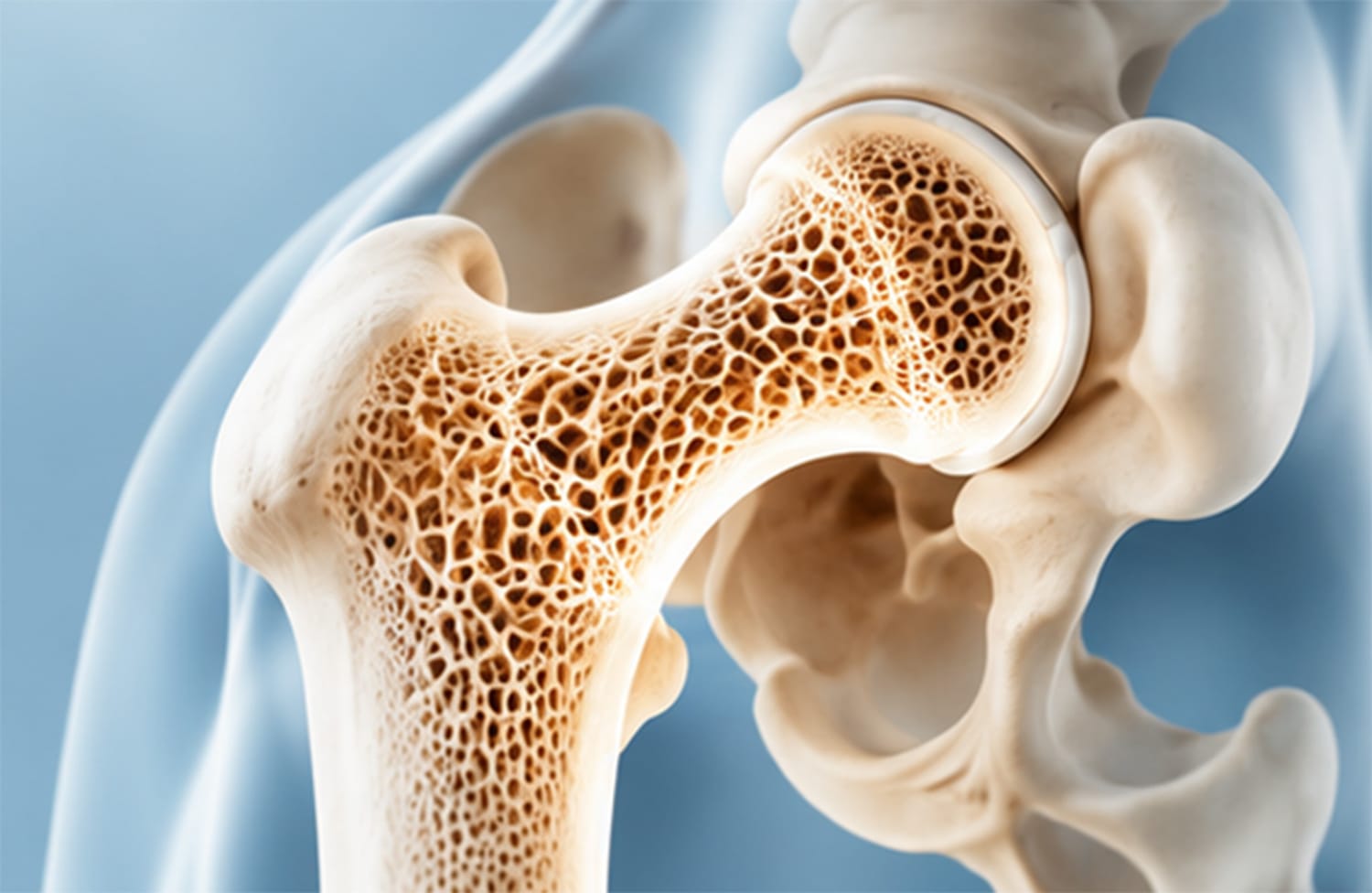
Bones are living tissue. All through your life, your body breaks down old bone and builds new bone in its place. [1]
Estrogen helps protect your bones and keep that balance steady. When estrogen drops sharply at menopause, bone breakdown can start to outpace bone building. [2]
For most women, bone loss speeds up for several years after menopause, then slows down again, but continues. [1] In the five to seven years after menopause, women can lose up to 20% of their bone density. [1][2]
By around age 65 or 70, women and men tend to lose bone at about the same rate. [1] That makes the early post-menopause years an especially important window for prevention.
Why This Matters
When bone loss goes too far, it can lead to osteoporosis, a condition where bones become thin and fragile. [1]
Osteoporosis is often called a "silent" disease because bone loss happens without symptoms. For many people, a broken bone is the first clue. Others only find out after losing height from small, sometimes painless fractures in the spine. [1]
It's also common. About one in two women over age 50 will break a bone because of osteoporosis. [1][2]
Your bone density is only one part of your bone strength, and for most women, fracture risk stays fairly low until much later in life. [3] What you do now helps keep it that way.
What You Can Do
You can't stop every bit of bone loss after menopause, but there is a lot you can do to protect your bone strength. [3]
Move in ways that load your bones. Exercise slows the body's loss of both muscle and bone, builds stronger bones, and lowers the risk of falls and fractures. [4] Weight-bearing activities like walking, plus strength training, give your bones the signal to stay strong. Research shows women can still improve bone density with strength training after menopause. [5]
Get enough calcium, ideally from food. Women 51 and older are advised to get 1,200 mg of calcium a day. [6] Dairy, fortified plant milks, canned salmon or sardines with bones, tofu made with calcium, and leafy greens are good sources. Too much calcium from supplements has been linked to kidney stones, so food first is a good rule. [6]
Get enough vitamin D. Vitamin D helps your body absorb calcium. The recommended amount is 600 IU a day up to age 70, and 800 IU after that. [6] Sunlight, fatty fish, eggs, and fortified foods all help.
Eat a balanced, nourishing diet. Fruits, vegetables, and enough protein support bone health alongside calcium and vitamin D. [2]
Limit alcohol and avoid smoking. Both can speed up bone loss. [2][7]
Make your home fall-safe. Good lighting, secure rugs, and handrails on stairs help prevent the falls that most often cause fractures. Balance exercises help too.
If you're thinking about calcium or vitamin D supplements, check with your provider first, especially if you take other medications or have kidney concerns.
Want to take the next step? Explore my practical guide to protecting your bones after menopause, with simple ways to incorporate strength training, supportive nutrition, and everyday habits into your routine.
Know Your Bone Health
Because bone loss is silent, testing is the main way to know where you stand. The most common test is a DEXA scan(also written DXA), a quick, painless scan that measures bone density. [8]
The U.S. Preventive Services Task Force recommends bone density screening for: [8]
All women 65 and older
Post-menopausal women younger than 65 who are at increased risk, based on their risk factors and a simple risk assessment from their provider
Screening can find osteoporosis early — before a fracture happens — so you and your provider can make a plan while there's still time to act. [9]
When to Talk With a Provider
It's worth asking about your bone health, even before 65, if any of these apply to you:
You went through menopause early, before age 45 [7]
You have a low body weight [10]
You smoke [10]
A parent broke a hip [10]
You've broken a bone after a minor fall or bump [3]
You've noticed you're getting shorter, or have new back pain that might be linked to the spine [1]
A simple way to start the conversation: "I'm post-menopausal and want to be proactive about my bones. Am I due for a bone density scan, and what else should I be doing?"
If testing shows low bone density or osteoporosis, there are effective treatment options. Your provider can help you decide what fits your health and risk level.
The Takeaway
Estrogen helps protect bone, so bone loss speeds up in the years after menopause.
Bone loss is silent — often the first sign is a broken bone or lost height.
Strength training, weight-bearing movement, calcium, vitamin D, and a balanced diet all support bone strength.
Limiting alcohol, not smoking, and fall-proofing your home help protect you too.
Ask your provider when you should have a bone density scan.
A question to sit with: What is one small thing I can start this week to care for the bones that will carry me for decades?
Educational Disclaimer
This article is for educational and informational purposes only. It is not intended to diagnose, treat, cure, or prevent any disease or medical condition, and it is not a substitute for professional medical advice. Always speak with a qualified healthcare provider about your individual needs, before starting a new exercise routine, supplement, or dietary change, and especially if you are taking medication or managing another health condition. If something feels urgent, please seek medical care right away.
Sources
Michigan State University Extension. Osteoporosis: How does bone loss happen? Part 1 (citing the National Osteoporosis Foundation).
Vanderbilt Health. Women: What You Need to Know About Bone Loss (citing the National Osteoporosis Foundation).
HealthWell (NHS content). Menopause & Your Bone Health.
Cedars-Sinai. Exercise and Older Adults.
Watson SL, et al. High-Intensity Resistance and Impact Training Improves Bone Mineral Density and Physical Function in Postmenopausal Women With Osteopenia and Osteoporosis: The LIFTMOR Randomized Controlled Trial. Journal of Bone and Mineral Research, 2018.
Institute of Medicine (National Academies). IOM Report Sets New Dietary Intake Levels for Calcium and Vitamin D. 2010.
Stony Brook Medicine. Menopause and Bone Health: Understanding Your Risk for Osteoporosis After 50.
U.S. Preventive Services Task Force. Osteoporosis to Prevent Fractures: Screening. Final Recommendation Statement, January 2025.
Patient Care. USPSTF Issues Final Recommendations on Osteoporosis Screening to Prevent Fractures. January 2025.
Links Medicus. Screening for Osteoporosis to Prevent Fractures: Updated USPSTF Guidelines (summary of the 2025 USPSTF statement).

LOOKING FOR MORE PERSONALIZED SUPPORT?
You Don't Have to Figure It All Out Alone
If you've been trying to make sense of changing symptoms, energy, hormones, nutrition, or other wellness concerns, a conversation can help you organize what you're noticing and identify where you may want to focus next.
Start with a complimentary 20-minute connection call.
Let's see whether working together feels like the right fit.

Nat's Wellness Journey is a space for approachable wellness education, practical resources, and real-life learning to help women better understand their bodies and make informed choices about their health.
💌 natalie@natswellnessjourney.com
Credential & Certifications





© 2026 Nat's Wellness Journey. All Rights Reserved
Privacy Policy | Terms of Use | Disclosure | Health Disclaimer