<meta name="p:domain_verify" content="a705de0f3e53d5f40b22517f555b7fbf"/>
<meta name="p:domain_verify" content="a705de0f3e53d5f40b22517f555b7fbf"/>
Why February Feels Harder: How to Build Emotional Resilience by Supporting Your Nervous System
February has a way of feeling heavier than it should.
You’re more emotional. More reactive. More tired than usual.
And you start wondering…
“Why does this feel harder than it used to?”
The answer may not be mindset. It may be your nervous system.

Lately, I’ve been hearing the same thing from so many moms.
“I feel more emotional than I used to.”
“I’m more reactive.”
“I’m tired, overwhelmed, and it feels harder to bounce back.”
And what’s striking is that these are capable, faithful, intentional women. They’re doing their best. They care deeply about their families and their health. Yet resilience the ability to steady yourself, to regulate, to keep going without falling apart feels harder than it used to.
What if the problem isn’t that we’ve become weaker emotionally?
What if it’s that our bodies are asking for more support?
This is the lens I want to explore here because emotional resilience isn’t just something we think our way into. It’s deeply connected to what’s happening in our bodies, our energy, our stress load, and our capacity to recover. And when we start there, with the body, everything begins to make a little more sense.

Emotional Resilience Is a Physical State
We often talk about resilience like it’s a mindset or a personality trait. Something you either have or don’t. Something you should be able to “push through.”
But emotional resilience is closely tied to the body.
When your nervous system is overwhelmed, emotions feel louder.
When your energy is depleted, patience wears thin.
When recovery is lacking, everything feels heavier.
This doesn’t mean you’re failing. It means your body is doing its best with the support it has.
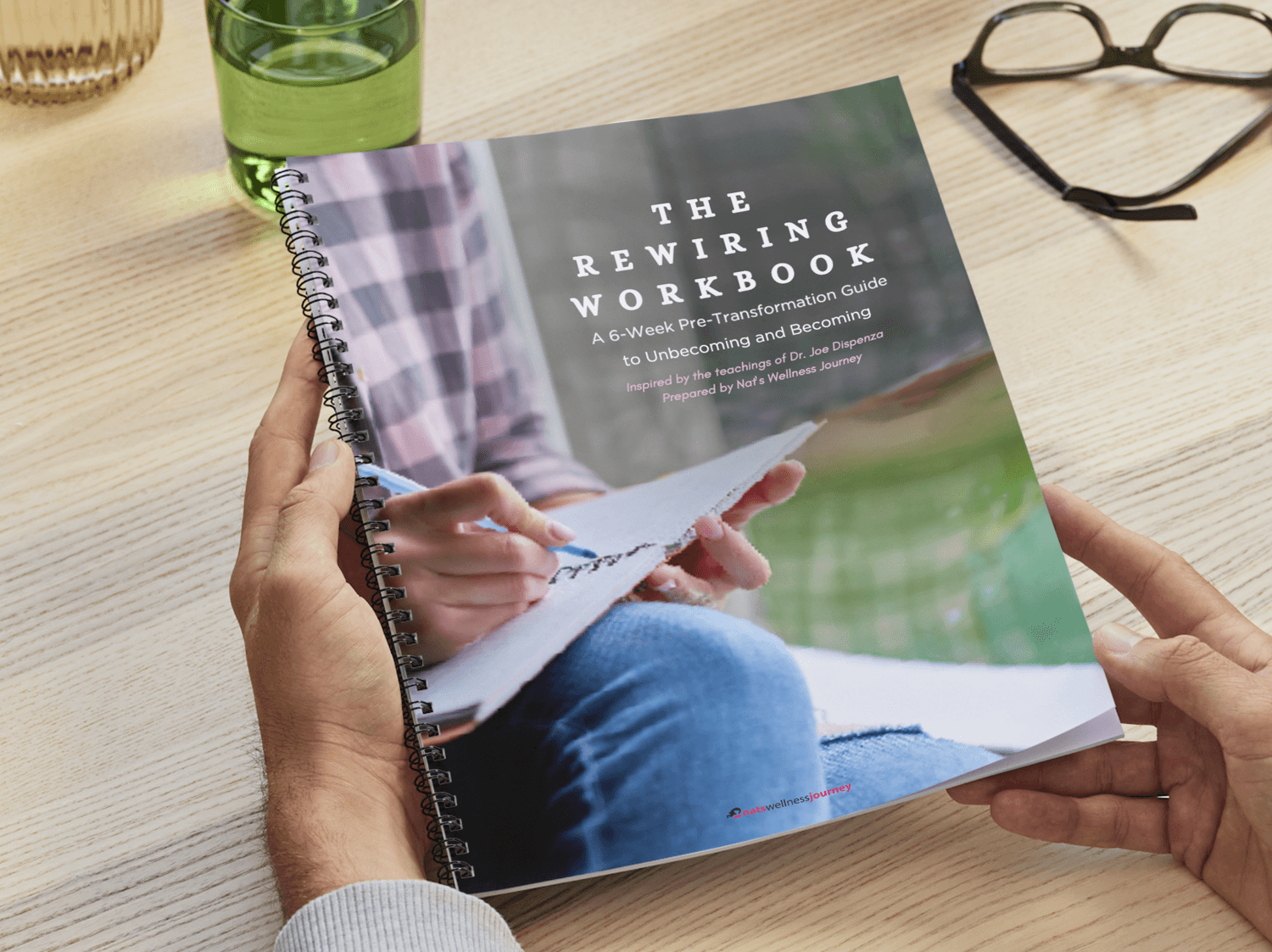
Ready to Break Free From Old Patterns?
The Rewiring Workbook gives you simple, step-by-step exercises to uncover hidden thoughts, release what’s holding you back, and start creating the life you actually want.
The Three Physical Foundations of Emotional Resilience

1.
Your Nervous System Sets the Tone
If you’ve noticed you’re quicker to snap, more easily overwhelmed, or more emotionally flooded than before, your nervous system may be running on high alert.
Modern motherhood asks a lot.
Constant notifications.
Constant needs.
Constant mental load.
Your body was never designed to stay “on” all the time.
Here’s what’s actually happening:
Your nervous system has two primary gears — one for stress and one for safety.
When you perceive stress (even small daily stress), your sympathetic nervous system activates. This is your fight-or-flight response. Your body releases stress hormones like cortisol and adrenaline. Your heart rate increases. Blood flow shifts. Your body prepares to react.
That response is not bad.
It’s protective.
But it was designed for short bursts — not constant background activation.
When stress becomes ongoing, your body doesn’t fully shift back into the parasympathetic state — the “rest and regulate” mode where healing, digestion, and emotional processing happen.

And when your nervous system stays activated:
Emotions feel louder
Patience shortens
Small problems feel big
You react before you reflect
This is not a character flaw.
It is physiology.
Chronic activation keeps your brain scanning for threats. Even neutral situations can feel charged. Your body is trying to protect you.
Resilience starts with regulation.
If your body feels safe, your emotions steady.
Regulation means helping your body feel safe enough to downshift.
It can look like:
A slow exhale longer than your inhale
A pause before responding
Stepping outside into natural light
Slowing your movements intentionally
Reducing stimulation when possible
These signals tell your nervous system:
You are safe. You can soften now.
And when the nervous system softens, resilience returns more naturally.
Because resilience isn’t about being constantly strong. It’s about being able to return to steady.

2.
Energy Stability Shapes Emotional Capacity
Low energy does not just make you tired.
It changes how you respond to life.
If you’ve ever noticed that everything feels harder when you’re exhausted or haven’t eaten in a while, that’s not weakness. That’s biology.
Your brain is one of the most energy-demanding organs in your body. It relies heavily on stable blood sugar and consistent fuel to function well — especially the prefrontal cortex, the part of your brain responsible for reasoning, impulse control, and emotional regulation.
When blood sugar drops too low, or spikes and crashes quickly, your body releases stress hormones like cortisol to bring levels back up.
Stable blood sugar = wider emotional capacity.

That cortisol response can feel like:
Irritability
Anxiety
Brain fog
Shakiness
Overwhelm
Again — this is not personality.
It is physiology.
If your body is under-fueled, under-rested, or constantly running on quick energy and adrenaline, your emotional window narrows.
Small problems feel big.
Patience shortens.
Your bounce-back time gets longer.
Emotional resilience requires energy.
It’s much harder to stay steady when your nervous system and your blood sugar are swinging all day.
This is why you can feel strong and grounded one morning… and fragile by mid-afternoon.
It’s not inconsistency. It’s capacity.
Supporting energy doesn’t have to be complicated.
It can look like:
Eating protein with meals to slow blood sugar spikes
Not skipping meals during busy days
Hydrating consistently
Taking short movement breaks to improve circulation
Going to bed earlier when you can
When your body receives stable fuel, your brain has more bandwidth.
When your brain has more bandwidth, your emotions feel more manageable.
Resilience grows when your system isn’t constantly trying to compensate.
You don’t need more discipline.
You need steadier fuel.

3.
Recovery Is Where Resilience Is Built
This is the part most of us resist.
We think resilience is built by pushing through.
But biologically, resilience is built during recovery.
When you sleep, your body shifts into repair mode. Cortisol levels naturally lower. Growth hormone is released. Tissues repair. The brain clears metabolic waste. Emotional memories are processed and integrated.
Sleep is not just rest.
It is neurological recalibration.
When sleep is shortened or fragmented, cortisol can stay elevated longer. Blood sugar becomes harder to regulate. The nervous system remains more reactive. Emotional triggers feel sharper.
Your body never fully gets the signal that it’s safe to power down.
And when the body stays in that semi-alert state, resilience shrinks.
You can only bounce back from stress if your body has time to reset.
Resilience is built during rest, not during the sprint.
It can look like:
Moments of quiet without input
Space without constant decision-making
Evenings that aren’t filled with stimulation
Saying no when your system is stretched
Your nervous system needs oscillation — activation and deactivation. Effort and rest. Output and recovery.
When that rhythm exists, your body becomes more adaptable.
Adaptability is resilience.
If you feel like you’re “not as strong as you used to be,” it may not be strength that’s missing.
It may be recovery.

When recovery improves:
Your bounce-back time shortens
Your emotions regulate faster
Your stress tolerance widens
Your steadiness returns
You do not build strength by never stopping.
You build it by allowing your body to repair.
What I’m Learning in My Own Life

For a long time, I thought emotional resilience meant being strong no matter what.
Holding it together.
Staying steady.
Not reacting.
Not letting things get to me.
And if I wasn’t able to do that, I assumed something was wrong with me.
But what I’ve started to see, especially in this season of life, is that my body has been carrying more than I gave it credit for.
Motherhood changes you.
Stress accumulates quietly.
Hormones shift.
Sleep changes.
Energy fluctuates.
And I kept expecting my emotional capacity to stay the same — even when my physical capacity had clearly shifted.
That mismatch creates frustration.

The breakthrough for me wasn’t learning how to “try harder.”
It was learning how to ask better questions.
Instead of:
Why am I so emotional?
I’ve started asking:
What does my body need right now?
Sometimes the answer is fuel.
Sometimes it’s light.
Sometimes it’s sleep.
Sometimes it’s space.
And sometimes it’s simply understanding that February feels different — because it is different.
I’m learning that resilience doesn’t grow when I push past my limits.
It grows when I support the system that carries me through them.
That shift has brought more steadiness than any productivity plan ever did.
Save This
If You Skimmed,
Start Here: 👉
Emotional resilience improves when you:
• Calm your nervous system daily
• Stabilize your energy and blood sugar
• Protect your recovery time
• Understand seasonal shifts
• Support your body instead of blaming it


Why Emotional Resilience Feels Harder in February

Did you know that February is one of the lowest-light months of the year in many parts of the country?
That matters more than we realize.
Reduced sunlight affects serotonin production — the neurotransmitter connected to mood stability. It also impacts melatonin rhythms, which influence sleep quality and energy patterns. When light exposure drops, circadian rhythms shift. And when circadian rhythms shift, cortisol regulation can shift with it.
In simple terms?
Your body is navigating a different environment.
Less natural light.
Colder temperatures.
More time indoors.
Lingering stress from the holidays.
All of that quietly increases the load on your nervous system.
This is why February can feel heavier.
Energy dips.
Motivation feels flatter.
Emotional triggers feel sharper.
All because your biology is adapting.
Winter fatigue is not imaginary. It’s seasonal physiology.
And when you understand that, instead of asking,
“What’s wrong with me?”
You can ask,
“What would support my body right now?”
February doesn’t require force.
It requires steadiness.


10 Reasons You’ll Love doTERRA Serenity®
Sleep support
Stress relief
Peaceful home vibes
Emotional balance
Perfect for kids
Beautiful scent
Great evening ritual
Focus helper
Pairs with Serenity Softgels
Everyday reset
How I use it: Diffuse before bed, rub on my wrists during stressful days, or add to Epsom salts for a calming bath.
If February felt heavier than you expected… you’re not alone.

If you’ve been more tired than motivated… that makes sense.
If your emotions have felt closer to the surface… that doesn’t mean you’re weak.
It means you’re human.
And your body is responding to the season it’s in.
Emotional resilience isn’t about becoming tougher.
It’s about becoming steadier.
It’s time to learn how to:
- Pause instead of react.
- Support your nervous system instead of overriding it.
- Build strength in small, repeatable ways.
You don’t need a massive overhaul.
You don’t need to “fix” yourself.
You just need a few anchors you can return to.
And the beautiful thing?
You can begin today.
Even in February.
Even mid-week.
Even after a hard morning.
Resilience isn’t built in big declarations.
It’s built in quiet decisions.
And every small one counts.

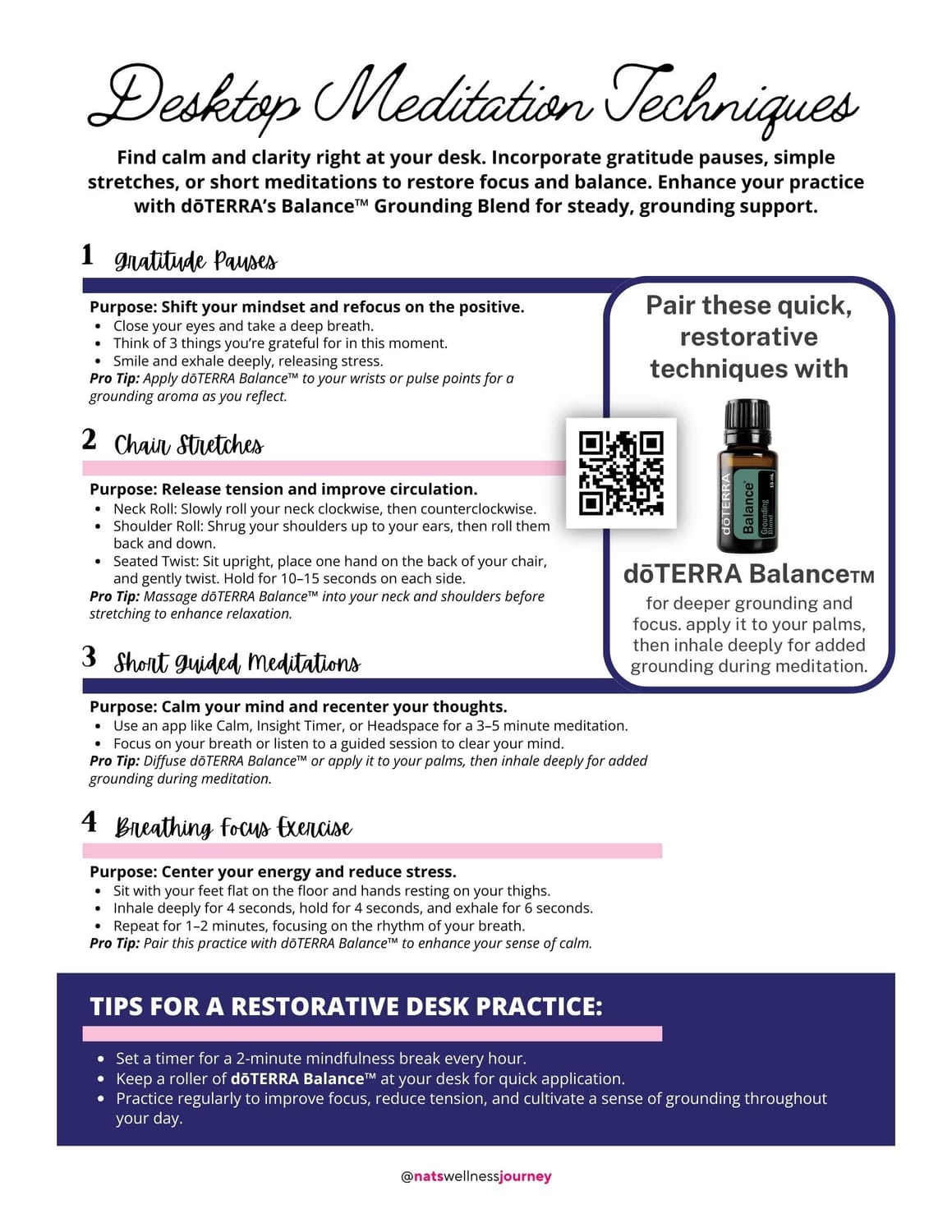
➡️ Save this post for later or share it with a friend who needs it.
You can bookmark this page too and come back anytime you need.





Sign up to get access to the 90-Day Reset Home Base
Don't wait! Get started & change your life today!

By Natalie
Everything shared here is based on my personal experience, education, and perspective. It is intended for educational purposes only and should not replace your own research, intuition, or professional guidance. Your body is unique, and what works for one person may not work the same for another. I encourage you to stay connected to your body, seek understanding, and make decisions that align with what you truly need.