Natural Support for Menopause

PLEASE NOTE: My goal is to help you better understand your body through education. The information shared in these Q&A articles is for informational purposes only and should not replace advice from your physician or other qualified healthcare provider. As research continues to grow, recommendations and scientific understanding may change over time. I encourage you to do your own research, ask questions, and work with a healthcare professional to determine what's best for your unique situation.
If you read the perimenopause natural support article, you already know how I feel about this: real, tried-and-tested options, not hype and not shortcuts. That same approach carries into this stage of your life, too — it just shifts focus a little.
Everything from that piece still applies here — magnesium, omega-3, black cohosh, sage, red clover, shatavari, soy, dong quai, wild yam, vitex, evening primrose oil, maca, ashwagandha, acupuncture, and gut-supporting probiotics are all still genuinely useful, since so many symptoms carry on well into this chapter.
Menopause tends to bring its own quieter questions, too — the ones that don't always come up in conversation.
What do I actually do about my bones now?
Is this dryness ever going to get better, or is this just how it is now?
Should I really be worried about my heart?
This article is here to sit with you in those questions and give you real, honest, practical things you can do about each one.
A note before we start
You know your body and your history better than anyone, and the same care from the last article applies here too — a few of these options carry real interactions worth understanding first. Loop in your doctor or pharmacist before starting anything new, especially if you're on medication or have a history of hormone-sensitive conditions. This isn't about slowing you down — it's so you can move forward with real confidence, not guesswork.
One Herb Worth Calling Out Specifically
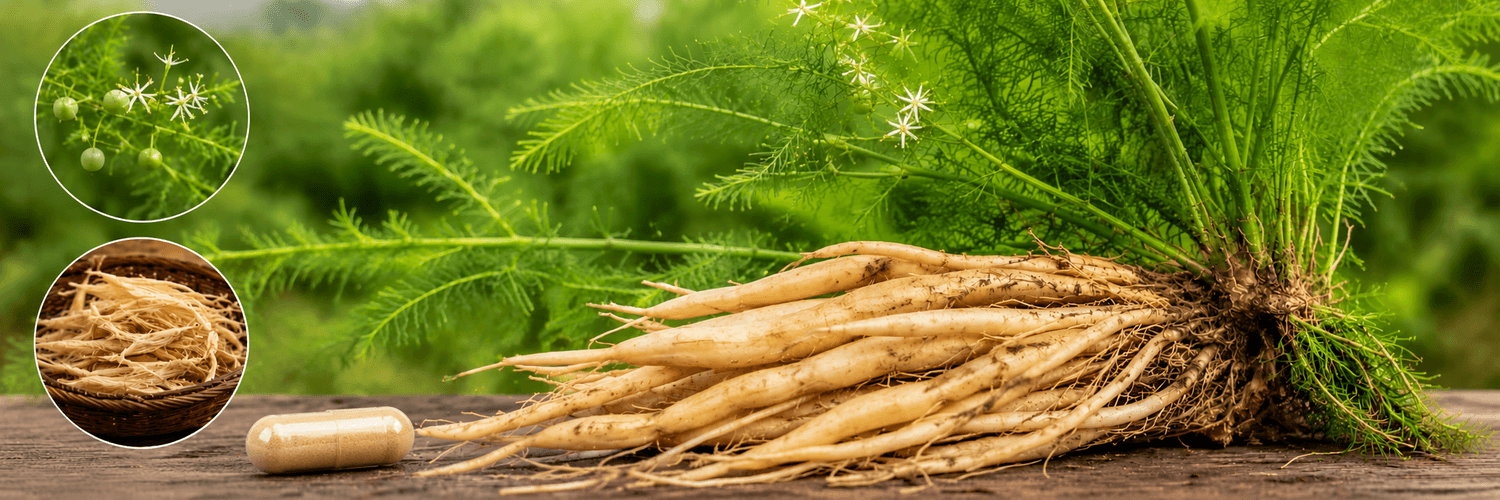
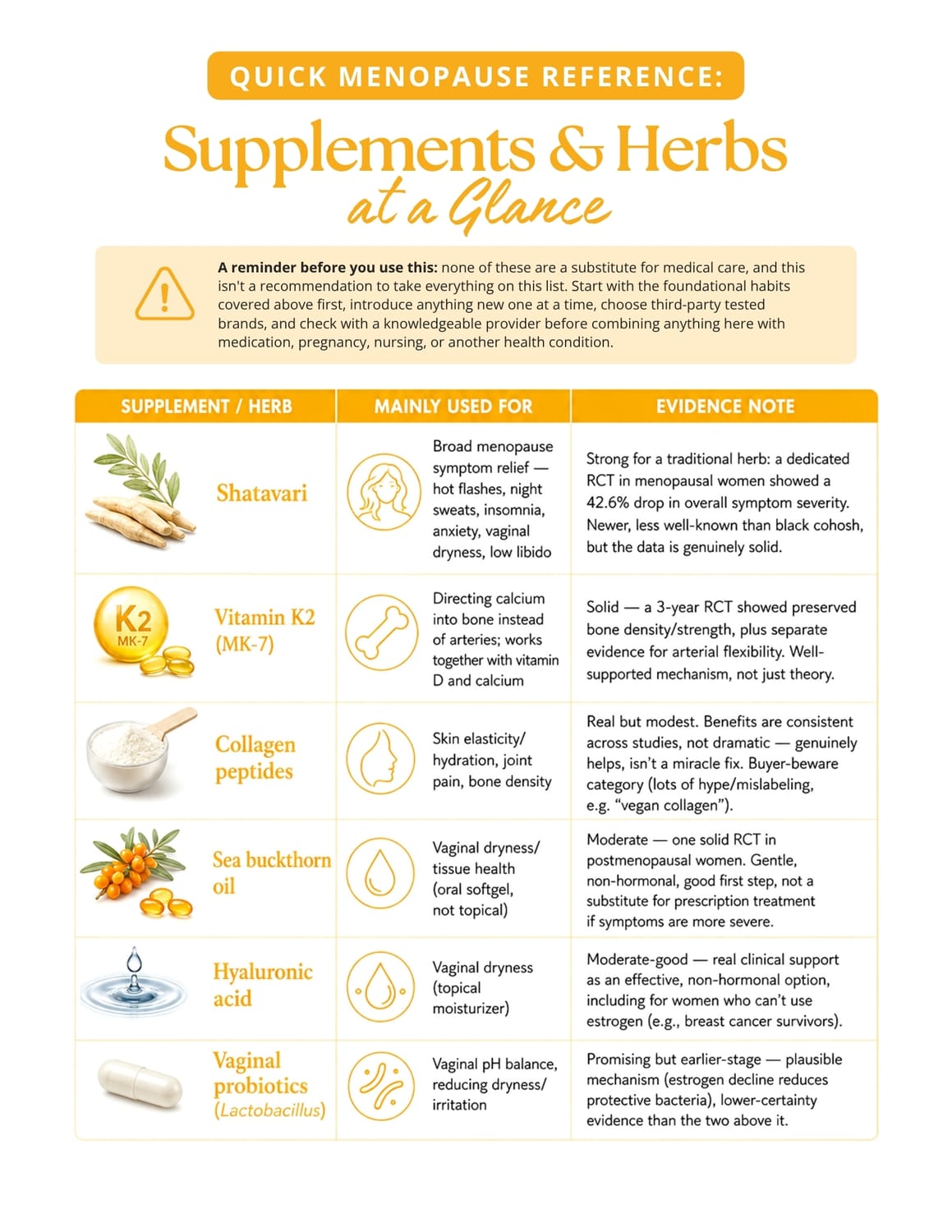
Shatavari earns its own mention here, beyond the general nod above. A separate randomized, placebo-controlled trial done specifically in menopausal women (not just perimenopausal) found a 42.6% reduction in overall symptom severity across hot flashes, night sweats, insomnia, anxiety, nervousness, vaginal dryness, and loss of libido — with no significant safety concerns reported, at a typical dose of 300mg/day of standardized root extract.¹
That combination of symptoms is notable, since it's one of the few options in this library with research touching both the classic symptoms and the vaginal and libido changes covered below. Same caution as the other estrogen-receptor-active herbs: talk with your doctor first if you have a personal or family history of hormone-sensitive cancer.
Protecting Your Bones and Heart Together
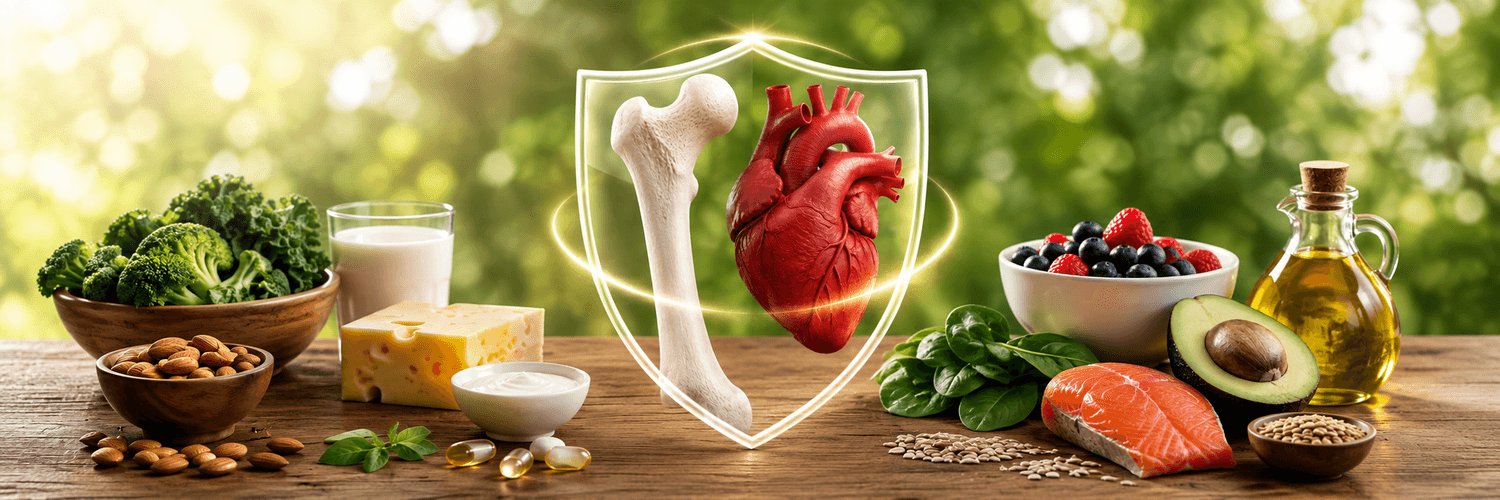
This is the single most important shift in focus for this stage of life, since both systems lose estrogen's natural protection at the same time. It's not the most exciting thing to think about — most women would rather talk about almost anything else — but this is exactly the kind of quiet, unglamorous care that adds up to decades of feeling strong and capable, not fragile. Two things are worth putting real attention toward here.
Vitamin K2. A genuine standout, and worth understanding clearly, because it doesn't really work alone — it needs vitamin D right there with it, and neither one does its full job without the other.
Here's the simplest way to picture it: vitamin D loads the calcium, and vitamin K2 directs it. Vitamin D is what lets your body actually absorb calcium from your food and pull it into your bloodstream — so you end up with more usable calcium on hand. But once that calcium is in your blood, something still has to tell it where to go. That's K2's job. It activates two proteins, osteocalcin and matrix Gla protein, that work almost like traffic directors — guiding that calcium into your bones, where it strengthens them, and steering it away from your arteries and soft tissue, where it doesn't belong.²
This is exactly why taking vitamin D by itself, without enough K2 alongside it, doesn't always give you the full benefit you'd expect. If there isn't enough K2 around to direct that traffic, some of the extra calcium your body just absorbed can drift into places like your artery walls instead of your bones — something researchers call the "calcium paradox," where good calcium intake alone doesn't reliably translate into good bone density.⁷ In plain terms: more calcium isn't really the goal on its own. Calcium ending up in the right place is.
A three-year study using 180mcg of the MK-7 form daily found it preserved bone mineral density and bone strength in postmenopausal women, while separate research shows it helps arteries stay flexible by preventing calcification.² This is exactly why K2 pairs so closely with the vitamin D and calcium. Think of it as the missing piece that makes sure the other two actually do the job you're taking them for. It's a small, steady habit that pays off for years, not just this season.
Collagen peptides. Worth understanding why this matters more now: women can lose up to 30% of skin collagen in just the first five years after menopause as estrogen drops.³ If you've noticed your skin doesn't bounce back quite the way it used to, or your joints feel stiffer than they should first thing in the morning, that's not in your head — and it's not something you just have to accept, either.
Research on hydrolyzed collagen (5–10g daily for at least 8–12 weeks) shows real, if modest, benefits across the board — improved skin hydration and elasticity, reduced joint pain particularly in osteoarthritis, and in one 2018 study of postmenopausal women with low bone density, measurably increased bone mineral density after 12 months compared to placebo.³ It's genuinely one of the few options that supports skin, joints, and bone all at once — worth considering if any of those three are on your mind.
Collagen is genuinely having a moment right now, which means the marketing is loud and not always accurate. A few things worth knowing before you buy, so you're making an informed choice rather than following the hype:
Look for "hydrolyzed" on the label. This means the collagen has already been broken down into smaller peptides your body can actually absorb — it's the form used in essentially all the research showing real benefit, and it's the one worth looking for.⁸
Marine or bovine both work. Marine collagen (from fish) tends to have a smaller peptide size, which may mean slightly easier absorption; bovine (from cattle) is the more common, budget-friendly option with just as much research behind it. Neither is clearly "better" — choose based on preference, budget, or dietary needs.⁸
Check the actual ingredient list, not just the front of the label. A good product should read something simple, like "hydrolyzed bovine hide collagen peptides" or "hydrolyzed marine collagen peptides" — not a long list of fillers, added sugars, or artificial flavoring.
Pairing it with a little vitamin C helps, since your body needs vitamin C to actually build new collagen — many quality products already include a small amount for this exact reason.⁸
Third-party testing matters here too — the same NSF or ConsumerLab standard mentioned earlier in this library applies just as much to collagen as any other supplement.
One honest clarification, since it comes up a lot: if you see something labeled "vegan collagen," know that it isn't actually collagen. Real collagen only comes from animal connective tissue — plants simply don't have the biology to make it.⁹ "Vegan collagen" products are really blends of the amino acids and nutrients (vitamin C, zinc, copper) your body uses to build its own collagen, which isn't a bad thing, but it's a genuinely different product than the collagen peptides the research above is actually about. Worth knowing the difference before you buy based on the label alone.
Caring for Vaginal and Urogenital Health
This is an area so many women experience and so few feel comfortable bringing up, even with their doctor — but there are real, gentle, well-studied options here. If this is you, please hear this clearly: there's nothing wrong with you, this is genuinely common, and you don't have to quietly accept it as your new normal.
First, here's simply why this happens. Estrogen isn't just involved in your cycle — it's also what keeps the tissue in this area thick, elastic, and naturally lubricated. When estrogen drops significantly at menopause, that tissue naturally becomes thinner and drier, the same way skin elsewhere loses some of its plumpness and moisture. That's it. It's not a sign that anything is wrong with you, and it's not a reflection of your health, your age, or your worth — it's a direct, physical result of a hormone shift, and it's one of the most common experiences of this entire stage of life.
Research suggests over half of postmenopausal women deal with this in some form, and it's likely under-reported, simply because so few women feel comfortable bringing it up.¹⁰ If you've felt alone in this, please know you truly aren't.
It's also completely okay if this part of menopause has stirred up feelings beyond the physical — frustration, sadness, a sense of loss, worry about intimacy or your relationship. Those feelings are valid too, and they don't mean anything is broken. This is simply a part of your body that needs some extra care right now, the same way you'd care for any other part of yourself going through a real change.
Sea buckthorn oil. A randomized, placebo-controlled study of postmenopausal women with vaginal dryness found real improvement in vaginal tissue health after three months of 3g daily, thanks to its essential fatty acids, vitamin E, and carotenoids.⁴ Most women take it as a daily oral softgel, not applied topically — it works from the inside, supporting tissue health as your body absorbs it.
It's genuinely gentle for mild symptoms, and because it doesn't work through estrogen, it's a reasonable, non-hormonal option even for women who need to avoid estrogen-like compounds, including breast cancer survivors. Worth knowing honestly: it offers modest relief and isn't a substitute for prescription treatment if symptoms are more significant, and it takes patience — real change generally shows up over months, not days. For many women, though, it's a genuinely helpful, gentle place to start.
Hyaluronic acid. As a topical vaginal moisturizer, this has real clinical support as an effective, well-tolerated, non-hormonal option — shown to help in both healthy postmenopausal women and cancer survivors who need to avoid hormonal treatments.⁵ It works simply, by helping tissue hold onto moisture, and it's applied directly (usually as a gel or suppository, a few times a week rather than daily) rather than taken by mouth — a nice option if you'd rather address this locally. It's one of the gentler options available, and many women use it alongside a separate lubricant for intimacy, which is a completely normal and sensible thing to do.
Vaginal probiotics. As estrogen declines, the protective Lactobacillus bacteria that normally keep vaginal pH balanced decline too — which is part of why dryness, irritation, and discomfort become more common in this stage.⁶ Supporting that balance with targeted probiotics (available as oral capsules or vaginal suppositories) is a promising, low-risk option worth discussing with your doctor, especially alongside the two options above.
A couple of simple daily habits worth adding. A few minutes of pelvic floor exercises most days genuinely helps with tissue tone, blood flow, and comfort in this area — no equipment, no appointment, just something you can do at home.
And if intimacy has become uncomfortable, a good water- or silicone-based lubricant used in the moment is a completely normal, sensible tool — not a failure, not a last resort, just a practical solution to a physical change.
Whatever combination you try, give it real time before judging whether it's working — most of these options need several weeks to months of consistent use. And if things don't improve, or symptoms are more than mild, please don't just live with it quietly. A doctor can offer additional options, including localized vaginal estrogen, which works differently than full-body hormone therapy and is considered safe for most women, including many with a history of breast cancer, in consultation with their oncologist. You deserve to feel comfortable in your own body, and there is genuinely no reason to just push through this alone.

Where to Find Guided, Personalized Support
You don't have to figure any of this out alone, and you don't have to become an expert in bone density or hormone therapy to make good decisions here. A few people worth having in your corner:
Me ☺️ — a Certified Functional Nutrition Counselor. This is exactly the kind of thing I love helping women work through: making sense of the research, understanding what your own body actually needs, and turning all of this into small, sustainable habits that fit your real life, not an overwhelming pile of supplements. I'm not a doctor, and I don't diagnose or treat anything — this is root-cause, lifestyle-focused support that works alongside your medical care, not instead of it. If you'd like a steady, honest guide as you figure out what actually helps you, you can sign up for a free consultation below.
A menopause-focused OB-GYN or certified menopause practitioner (look for NAMS/Menopause Society certification) can combine medical and natural guidance in one place — worth actively seeking out if your current doctor hasn't brought up bone or heart protection on their own
A pelvic floor physical therapist can be a genuine game-changer for vaginal and urogenital symptoms — an option a lot of women don't even know exists, and one worth asking about directly
A registered dietitian can help turn the K2, calcium, and collagen pieces above into an actual eating pattern, rather than just another bottle on the counter
A licensed naturopathic doctor (ND) or functional medicine practitioner can help you combine all of this into one coherent plan, instead of guessing alone
And as covered in the digestive enzyme article earlier in this library: look for third-party tested supplement brands (NSF certification, or products reviewed by ConsumerLab) so you know what you're actually getting.
Here's What to Do
You don't need every option on this list — pick what actually matches what you're experiencing. If you want one option that touches the broadest range of symptoms at once, shatavari's research covers hot flashes, sleep, mood, and vaginal/libido changes together, making it a reasonable place to start.
If bone and heart protection is on your mind, vitamin K2 paired with the vitamin D, calcium, and boron already covered in this library is a strong, well-rounded foundation. If skin, joints, or bone density are your focus, collagen is worth a real 8–12 week trial. If vaginal dryness or discomfort has been part of your experience, start gently with sea buckthorn oil or a hyaluronic acid moisturizer — this is genuinely common, genuinely treatable, and nothing to feel like you have to just live with quietly.
Keep using your Hormone & Cycle Pattern Tracker to notice what's actually shifting as you try any of these.
Whatever you choose to start with, know this: the fact that you're here, reading this, learning what your body actually needs right now — that's already the hardest part, and you're doing it. The years ahead of you deserve this same kind of care, one small, steady choice at a time.
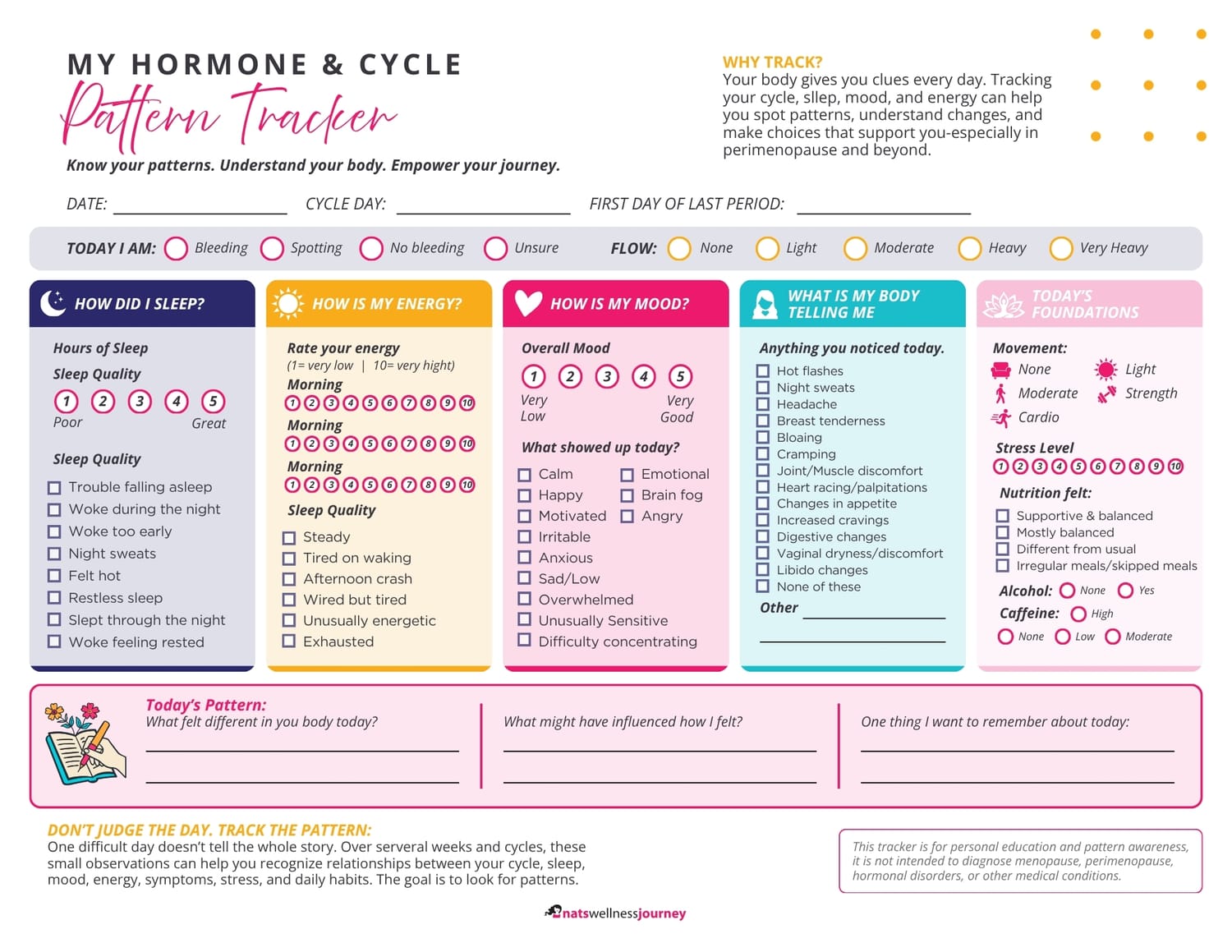
Get your FREE
Hormone & Cycle
Pattern Tracker
Enter your email above, click the button and you will be directed to where you can download the flier.
No spam ever, unsubscribe anytime.
This article is for educational purposes and isn't a substitute for personalized medical advice. Please talk with your doctor or pharmacist before starting any new supplement or therapy, especially if you take medication or have a history of hormone-sensitive conditions.
Sources
Shatavari root extract randomized controlled trial on menopausal symptom severity: Efficacy and Safety of Shatavari Root Extract for the Management of Menopausal Symptoms — PMC
Vitamin K2 (MK-7) research on bone density and cardiovascular protection: Efficacy of vitamin K2 in the prevention and treatment of postmenopausal osteoporosis — Frontiers in Public Health
Collagen peptide research on skin, joint, and bone outcomes: Calcium and Vitamin D Supplementation with and Without Collagen on Bone Density and Skin Elasticity in Menopausal Women — PMC
Sea buckthorn oil randomized controlled trial for vaginal atrophy: Effects of sea buckthorn oil intake on vaginal atrophy in postmenopausal women — Maturitas
Hyaluronic acid as a non-hormonal treatment for genitourinary syndrome of menopause: Hyaluronic Acid: A Valid Therapeutic Option for Early Management of Genitourinary Syndrome of Menopause in Cancer Survivors? — PMC
Vaginal microbiome and Lactobacillus decline after menopause: Probiotics for Menopause: Benefits, Bloating, and Vaginal Health — Evvy
The "calcium paradox" and vitamin K2's role in bone-vascular crosstalk: The Dual Role of Vitamin K2 in "Bone-Vascular Crosstalk" — PMC
Collagen supplement buying guide (hydrolyzed form, marine vs. bovine, vitamin C pairing): How to Choose the Best Collagen Supplement — Bubs Naturals
"Vegan collagen" clarification — plant-based products are amino acid/nutrient blends, not true collagen: Is There Such a Thing as Vegan Collagen or Is It Just a Myth? — Avea Life
Prevalence of genitourinary syndrome of menopause (GSM) among postmenopausal women: Prevalence of Psychosomatic and Genitourinary Syndrome Among Menopausal Women: A Systematic Review and Meta-Analysis — PMC
FREE Guide
Click on Picture 👉
Just starting Menopause or Past menopause?
Click on the one you currently are experiencing.

Hormones can begin fluctuating years before your period actually stops. You may notice changes in sleep, energy, mood, body composition, cycles, cravings, temperature regulation, or how you respond to stress.

Supporting the Body for the Decades Ahead
Once the menopausal transition is complete, the goal shifts again. This stage can become less about managing unpredictable hormonal swings and more about protecting long-term metabolic health, strength, mobility, cognition, cardiovascular health, and quality of life.
WANT A LITTLE MORE SUPPORT
Sign Up for A FREE Consultation Today!
This is a complimentary 20-minute call.
I will personally connect with you to understand your needs and see how I can best support you.

Nat's Wellness Journey is a space for approachable wellness education, practical resources, and real-life learning to help women better understand their bodies and make informed choices about their health.
💌 natalie@natswellnessjourney.com
Credential & Certifications





© 2026 Nat's Wellness Journey. All Rights Reserved
Privacy Policy | Terms of Use | Disclosure | Health Disclaimer