Natural Support for Perimenopause: Working With Your Body, Not Against It

PLEASE NOTE: My goal is to help you better understand your body through education. The information shared in these Q&A articles is for informational purposes only and should not replace advice from your physician or other qualified healthcare provider. As research continues to grow, recommendations and scientific understanding may change over time. I encourage you to do your own research, ask questions, and work with a healthcare professional to determine what's best for your unique situation.
If you've read [our first piece on understanding perimenopause, menopause, and post-menopause], you already know the basics: this isn't a decline, it's a recalibration. Your hormones aren't quietly fading — they're fluctuating, sometimes wildly, and that fluctuation is what's actually behind the sleepless nights, the rage that comes out of nowhere, the weight that's redistributing itself without your permission, and the fog that makes you walk into a room and forget why you're standing there.
This piece is the natural next step: what do you actually do with that information?
Before we go further, an important disclaimer: I am not a doctor, and nothing here is medical advice or a treatment plan. What follows is holistic, foundational support — the kind of thing that helps your body function better underneath whatever else is going on, whether or not you're also working with a provider, considering hormone therapy, or on medication for something else entirely.
If you're on medication, pregnant, nursing, or managing another health condition, talk to a knowledgeable provider before adding anything new here. That's not a formality — it's just good sense, the same way you'd want to know if two things didn't mix well before combining them.
My goal isn't to hand you a supplement list and call it a day. It's to be a bridge — connecting what's happening in your body to what you can actually understand and do about it.

The Difference Between Covering Up a Symptom and Supporting Your Body
Almost everything marketed at women in this stage of life is aimed at making a symptom go away as fast as possible. That's understandable — when you haven't slept in a week, you want relief, not a lecture on root causes. But there's a meaningful difference between numbing a symptom and supporting the system underneath it.
A hot flash, a 3am wake-up, a wave of rage — these aren't malfunctions. They're your body's very loud way of telling you that your nervous system, your blood sugar, your hormones, or your stress load are out of balance and asking for support. Holistic care doesn't ignore the symptom. It just asks one more question first: what is this symptom trying to tell me, and what would it look like to actually support my body here instead of just muting the signal?
That's the lens for everything below. Some of it is about calming a system in distress. Some of it is about giving your body the raw materials it needs to adapt to a genuinely new hormonal environment. None of it requires you to overhaul your entire life overnight — small, consistent things tend to matter more here than anything dramatic.

Calming an Overactive Nervous System
If there's one thing underneath almost every perimenopause symptom, it's a nervous system working overtime. Progesterone — your body's natural calming hormone — is often one of the first things to decline, and it starts declining before your periods even become noticeably irregular. That's a big part of why anxiety, irritability, and "rage that came out of nowhere" tend to show up early, and why so many women are told it's "just stress" months before anyone mentions hormones.
The good news is that your nervous system responds to cues, not just chemistry — and you can send it a lot of calming cues yourself. Slow, extended-exhale breathing (in for four counts, out for six or eight) is one of the most well-studied ways to shift your body out of fight-or-flight in real time; it works because a longer exhale directly signals your vagus nerve to downshift. Cold water on your wrists or face during a wave of anger, a short walk outside, or simply naming out loud what you're feeling ("this is a hormonal wave, not an emergency") can all interrupt the spiral before it takes over.
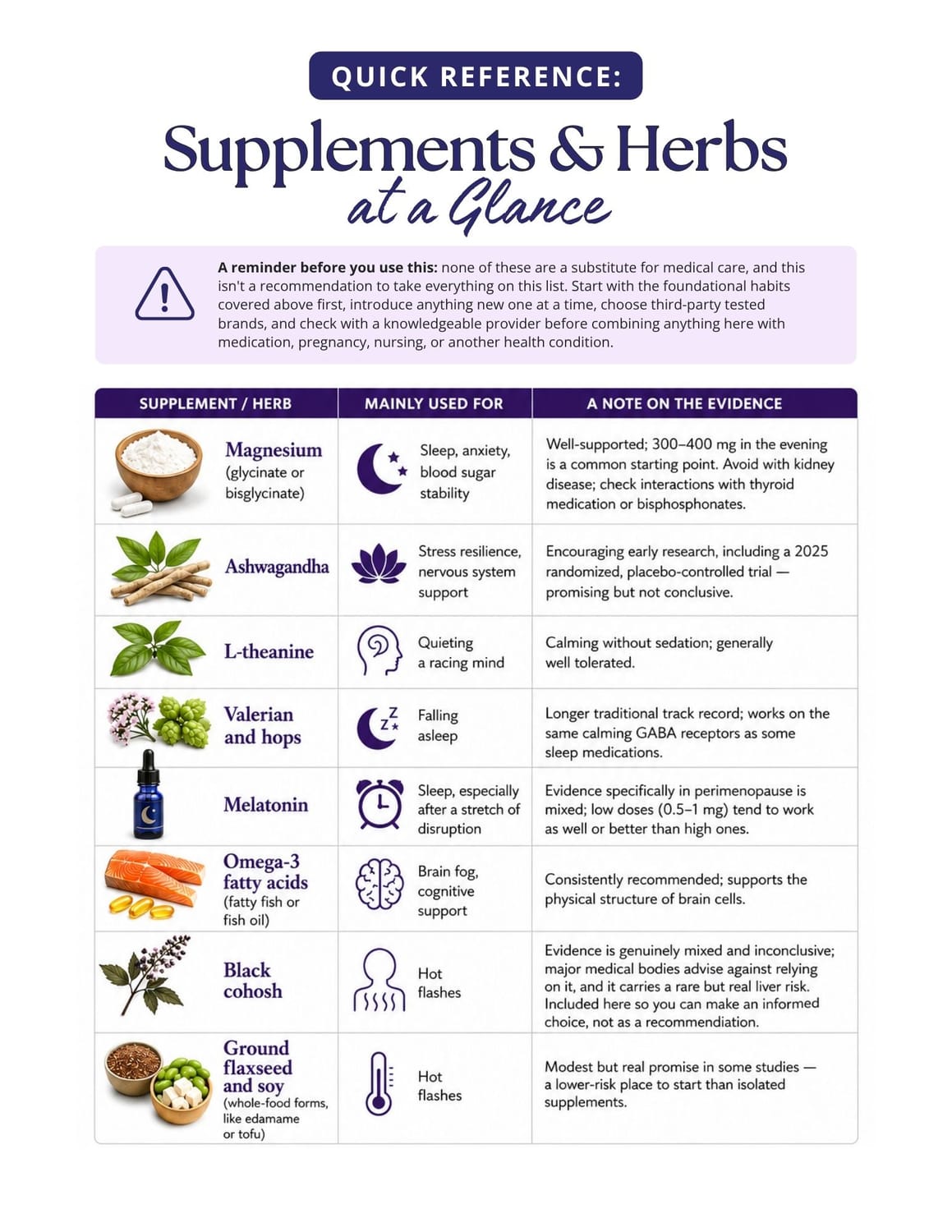
Magnesium is worth knowing about here, too. It supports the calming GABA pathway in your brain, helps regulate cortisol, and plays a role in both sleep and blood sugar stability — which is part of why it shows up in nearly every conversation about perimenopause support. Magnesium glycinate or bisglycinate tends to be the gentlest on digestion, with 300–400 mg in the evening being a commonly used starting point. (Skip it if you have kidney disease, and check with a pharmacist if you're on thyroid medication or bisphosphonates, since magnesium can interfere with absorption.)
Adaptogenic herbs like ashwagandha are popular in this space, and there's genuinely encouraging early research — a randomized, placebo-controlled trial published in 2025 found it helped with menopausal symptom scores compared to placebo. It's not a guarantee, and adaptogens work more like training for your stress response than a quick fix, but it's a reasonable, low-risk thing to explore alongside the basics if your nervous system feels like it's constantly running hot.

Reclaiming Sleep
Sleep disruption is often the very first sign women notice in perimenopause, and it compounds everything else — mood, appetite, focus, patience. There's rarely one single fix, but a few things consistently make a real difference:
Keep your bedroom cool and dark, and if night sweats are part of your picture, breathable cotton or moisture-wicking sleepwear helps more than people expect. Get bright light — ideally sunlight — within the first hour of waking; it's one of the strongest, least-talked-about tools for resetting a disrupted circadian rhythm, and it costs nothing.
On the supplement side, magnesium (as above) is often the first thing worth trying. L-theanine can help quiet a racing mind without sedation. Valerian and hops work on the same calming GABA receptors and have a longer track record of use for sleep. Melatonin's evidence in perimenopause specifically is more mixed than the marketing suggests — some women find it genuinely helpful, especially after a stretch of disrupted sleep, but it's not a universal fix, and more isn't better; low doses (0.5–1mg) tend to work as well or better than high ones.
And don't underestimate the unglamorous stuff: a consistent wake time (even on weekends), dimming screens in the evening, and a short wind-down routine — stretching, reading, a few minutes of slow breathing — genuinely move the needle. If racing thoughts at 3am are the real problem, cognitive behavioral techniques for insomnia (like getting up and doing something calm in dim light rather than lying there willing yourself to sleep) are some of the best-supported tools available, holistic or not.

Steadying Your Metabolism
This is often the most frustrating symptom cluster, because it's the one where women are told nothing is wrong when everything feels wrong. Weight redistributing to the midsection, constant hunger, energy crashes — despite no real change in habits — is one of the most common and least-explained experiences of this transition, and it's largely rooted in fluctuating estrogen making your cells more resistant to insulin. Standard bloodwork often doesn't catch this early stage, so "normal labs" don't mean nothing is happening.
The most effective things here aren't dramatic. Protein at every meal — aiming for a palm-sized portion or more — slows the blood sugar spike that follows eating and helps preserve the muscle mass that naturally starts declining in this decade. Pairing carbohydrates with fiber, protein, or fat rather than eating them alone (fruit with nut butter instead of fruit alone, for instance) does something similar. A ten-minute walk after a meal measurably blunts the blood sugar spike that follows — it's one of the simplest, most evidence-backed tools available and requires no special equipment or knowledge.
Reducing alcohol is worth a second look during this stage specifically, not because it's "bad," but because it disrupts both sleep and blood sugar regulation at exactly the time your body has the least buffer for either. And this is a good moment to mention movement more broadly, because it deserves its own space below.

Moving Your Body Through This
If you take one thing from this entire guide, let it be this: strength training is one of the single most well-supported things you can do for your body in perimenopause, and it's underused compared to how much attention cardio gets. Muscle mass naturally declines during this transition, and that decline affects your metabolism, your bone density, your balance, and how your body handles blood sugar — lifting weights (however "heavy" means for you right now) is one of the most direct ways to work against that decline rather than just accept it.
You don't need to become a powerlifter. Two to three sessions a week, working major muscle groups until they feel genuinely challenged, is enough to matter. If you're new to it, start light and build — the goal is consistency over intensity at first. This is also a good moment to notice if you've been leaning heavily on long, frequent cardio sessions: for some women in perimenopause, a lot of chronic cardio can actually add to an already elevated stress load, and a mix of walking, strength work, and short bursts of higher-intensity movement tends to serve the body better than hours on a treadmill.

Supporting a Foggy Brain
Brain fog — the walking-into-a-room-and-forgetting-why kind — is one of the most validated experiences of perimenopause in recent research, and also one of the most anxiety-provoking, because it's easy to fear it means something worse than it does. For most women, it's a real but temporary effect of fluctuating estrogen (which plays a direct role in memory and focus), often made worse by poor sleep and unstable blood sugar — both of which you're already addressing above.
Omega-3 fatty acids (from fatty fish, or a quality fish oil supplement) support the physical structure of brain cells and are one of the more consistently recommended nutrients in this area. Staying genuinely hydrated matters more than it sounds like it should — even mild dehydration measurably affects concentration. And movement, especially anything that raises your heart rate, increases blood flow to the brain in ways that show up in cognitive testing within the same day. This is a case where the most helpful thing isn't a new intervention — it's making sure sleep, blood sugar, and stress (covered above) are actually getting addressed, because brain fog is often the symptom that responds most to getting the foundational things right.
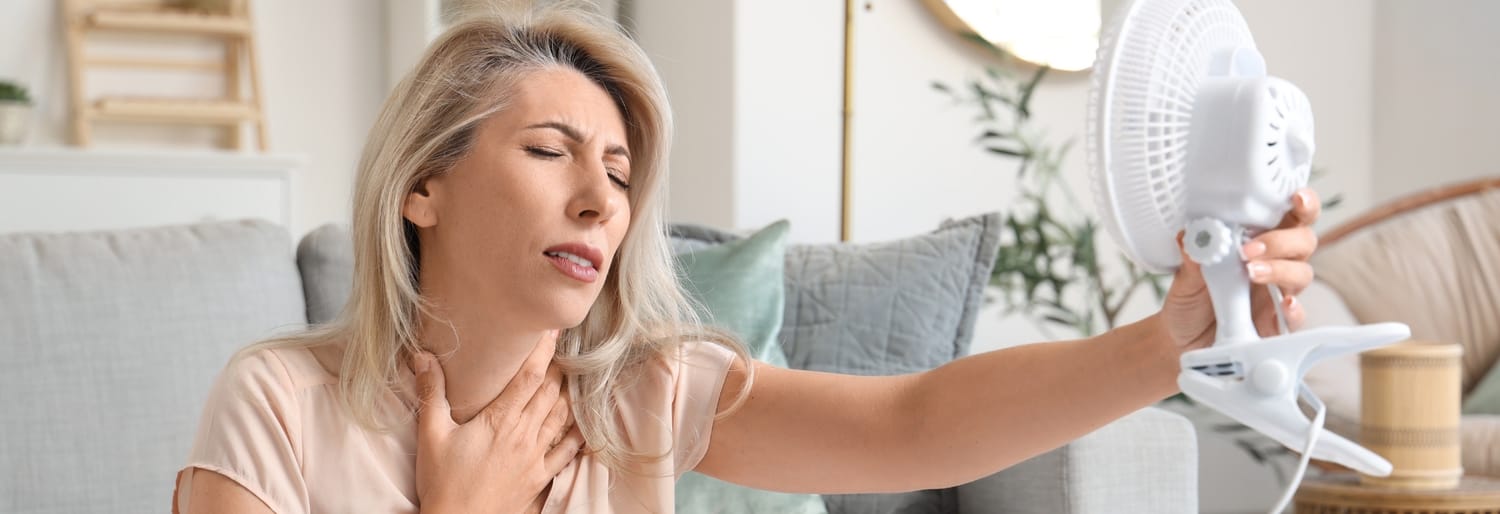
Cooling the Heat: Hot Flashes and Night Sweats
This is the symptom most associated with "the change," and also the one with the most crowded, most oversold supplement market — so it's worth being especially honest here.
Black cohosh is probably the most recognized natural remedy for hot flashes, and it's reasonable to be curious about it. But it's important to know that the research is genuinely mixed: a Cochrane review of 16 trials found insufficient evidence to support its use, and major medical bodies including the North American Menopause Society advise against relying on it for this reason. It also carries a rare but real risk of liver effects, so it's not something to combine with liver conditions or without a provider's awareness. I'd rather tell you the honest state of the evidence than sell you something that sounds good and underdelivers.
What has better support: identifying and reducing your personal triggers (alcohol, caffeine, spicy food, and overheated rooms are the most common), dressing in breathable layers, and keeping a cool glass of water nearby. Paced breathing at the very start of a flash — slow, deep, extended exhales — has been shown to reduce both the intensity and frequency of hot flashes over time. Phytoestrogen-rich foods like ground flaxseed and soy (whole-food soy, like edamame or tofu, not isolated supplements) show modest but real promise in some studies. And acupuncture has some of the strongest research support of any complementary approach in this whole guide — multiple reviews show meaningful reductions in both frequency and severity of hot flashes, along with improvements in sleep and mood, making it worth considering if it's accessible to you.

Herbs and Supplements
It's tempting to want a list of "the five supplements that fix perimenopause." I'm not going to hand you that, because it doesn't exist, and pretending it does is exactly the kind of overpromising I don't want this space to be about.
What I will say: start with the foundational things first — sleep, blood sugar, movement, nervous system regulation — because they affect nearly every symptom at once, and supplements work far better on top of that foundation than instead of it. When you do add something, add one thing at a time, so you can actually tell if it's helping. Look for third-party tested brands.
And please, genuinely, loop in a pharmacist or knowledgeable provider before combining anything new with medication, especially if you're managing another condition — herbs are gentle, but they're not nothing, and interactions are real.

You're Not Just Managing This — You're Moving Through It
Here's what I want you to walk away with: nothing in this guide is about white-knuckling your way through perimenopause, and none of it is about achieving some perfect, symptom-free version of this transition. It's about giving your body real support while it does something genuinely hard — and trusting that small, consistent things, done with intention, add up to something real over time.
This is also just the beginning. Perimenopause is one chapter of a longer story, and menopause and post-menopause each bring their own shifts, their own questions, and their own holistic support — we'll build guides for both of those next. For now, start with whatever felt most true to what you're experiencing today. You don't have to do all of this at once. You just have to start somewhere real.
FREE Guide
Click on Picture 👉
Past Perimenopause?
Click on the one you currently are experiencing.

Menopause is technically a point in time—the completion of 12 consecutive months without a menstrual period—but the transition surrounding it can involve much more than reproductive hormones.
This section can help women understand what is changing and what systems deserve more attention during this stage.

Supporting the Body for the Decades Ahead
Once the menopausal transition is complete, the goal shifts again.
This stage can become less about managing unpredictable hormonal swings and more about protecting long-term metabolic health, strength, mobility, cognition, cardiovascular health, and quality of life.
WANT A LITTLE MORE SUPPORT
Sign Up for A FREE Consultation Today!
This is a complimentary 20-minute call.
I will personally connect with you to understand your needs and see how I can best support you.

Nat's Wellness Journey is a space for approachable wellness education, practical resources, and real-life learning to help women better understand their bodies and make informed choices about their health.
💌 natalie@natswellnessjourney.com
Credential & Certifications





© 2026 Nat's Wellness Journey. All Rights Reserved
Privacy Policy | Terms of Use | Disclosure | Health Disclaimer