Natural Support for Post- Menopause - What's Working

PLEASE NOTE: My goal is to help you better understand your body through education. The information shared in these Q&A articles is for informational purposes only and should not replace advice from your physician or other qualified healthcare provider. As research continues to grow, recommendations and scientific understanding may change over time. I encourage you to do your own research, ask questions, and work with a healthcare professional to determine what's best for your unique situation.
If you've read the perimenopause and menopause natural support articles, you already know how this library approaches supplements and herbs: real, tried-and-tested options, grounded in actual research, not hype. That same approach carries all the way through into this next chapter too — it just keeps evolving, because post-menopause isn't a short season. It's the longest chapter of all, and it deserves this same level of care for the whole 30-plus years of it, not just the first few.
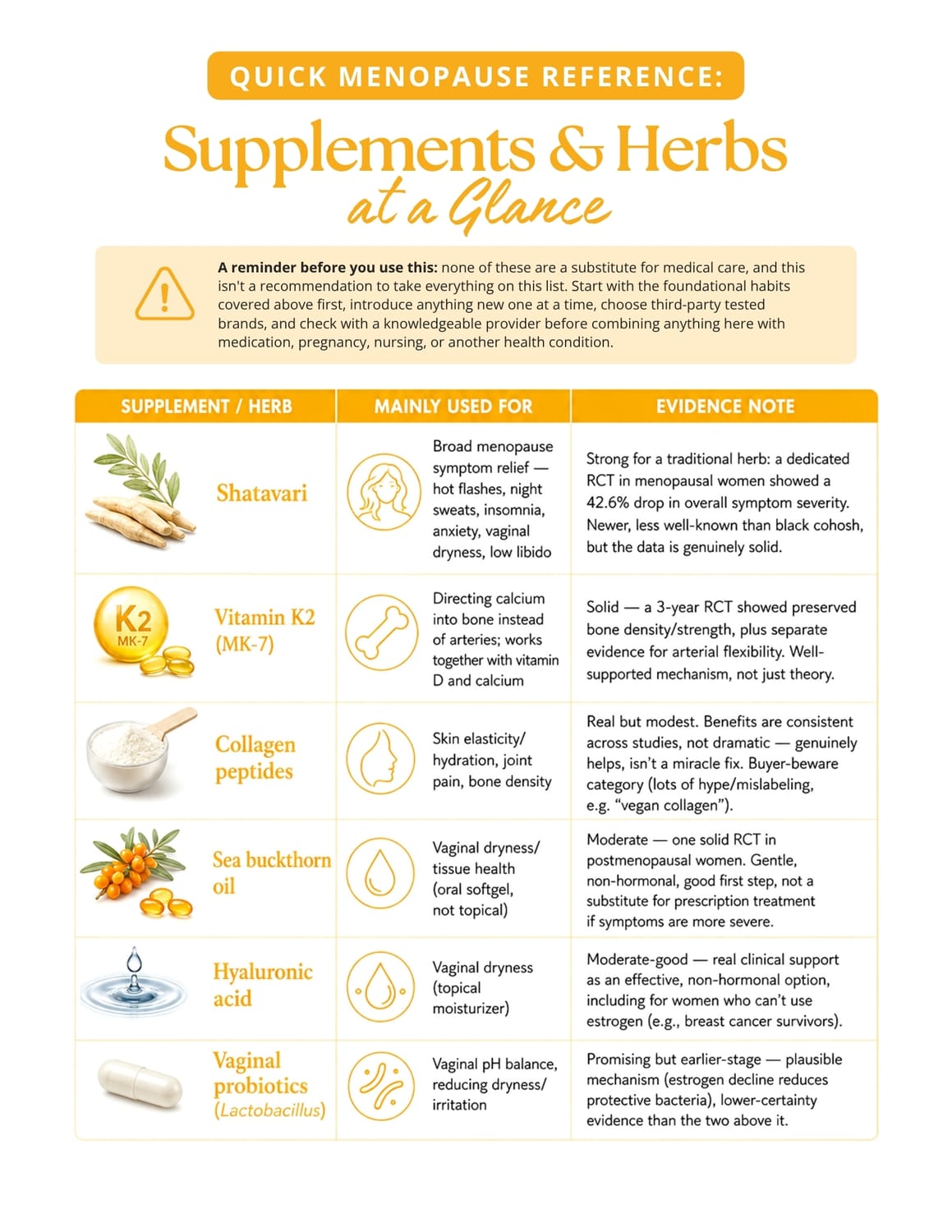
Everything from those two articles still applies here. Magnesium, omega-3, vitamin D, calcium, CoQ10, boron, black cohosh, sage, red clover, shatavari, soy, dong quai, wild yam, vitex, evening primrose oil, maca, ashwagandha, acupuncture, and gut-supporting probiotics are all still genuinely useful — and vitamin K2, collagen peptides, sea buckthorn oil, hyaluronic acid, and vaginal probiotics remain just as relevant for bone, heart, and vaginal health as they were the day you started using them.
This article isn't here to repeat any of that. It's here to go deeper into what becomes especially important for this specific, decades-long stage: keeping your muscle, protecting your brain, steadying your blood sugar, and staying comfortable in your joints — the things covered briefly in the postmenopause health checklist, expanded into real, practical detail here.
A note before we start
You know your body and your history better than anyone. A few of the options below are genuinely more potent than the herbs covered in the earlier articles, so this note matters even more here: loop in your doctor or pharmacist before starting anything new, especially if you're on any medication — this isn't about slowing you down, it's about making sure everything you're doing actually works together.
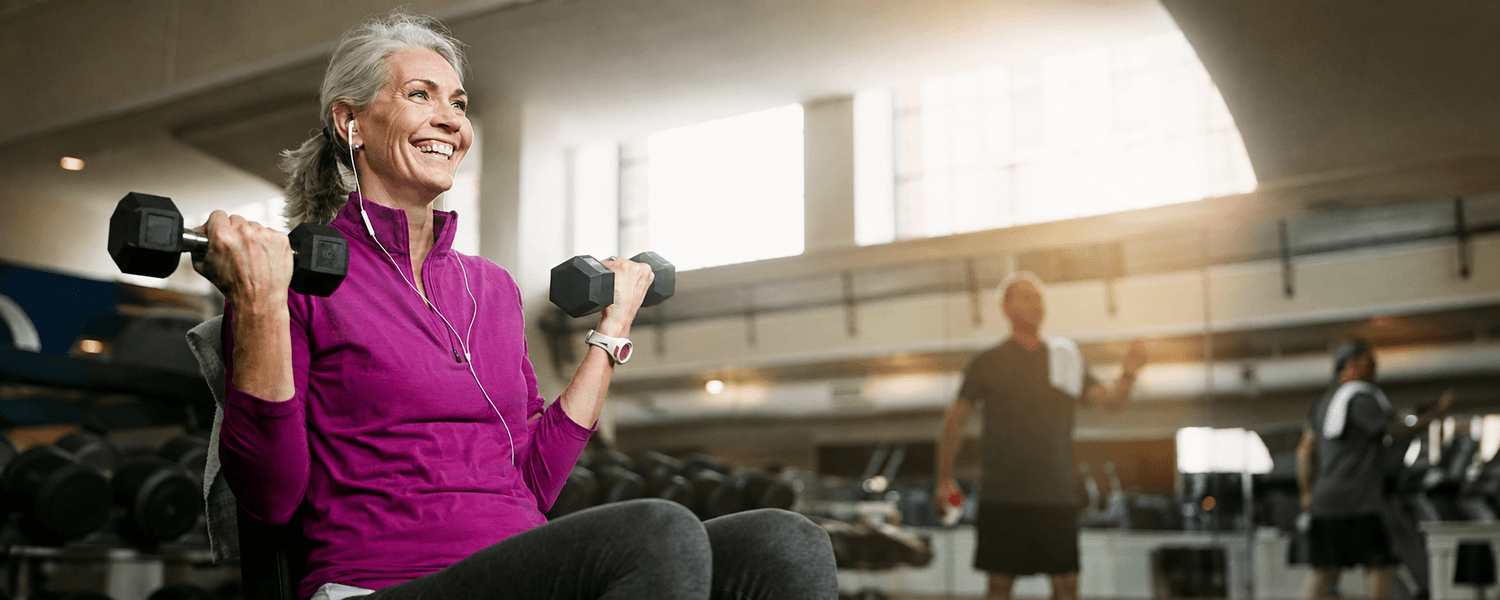
Preserving Your Strength
(The most underrated priority of this stage)
Here's something that doesn't get talked about nearly enough: starting in your 30s, muscle mass naturally begins to decline, and that decline speeds up noticeably after menopause as estrogen drops. Left unsupported, this can mean real loss of strength, balance, and independence over the decades of postmenopause ahead — but it is genuinely one of the most controllable things on this entire list.
Creatine. If there's one supplement worth taking seriously in this stage that doesn't get enough attention, it's this one. Creatine is one of the most researched supplements in existence, and recent research specifically in menopausal and postmenopausal women shows real, meaningful benefits — not just for athletes. In one study, postmenopausal women who combined creatine with resistance training lost only about 1.2% of bone mineral density in the hip over the study period, compared to nearly 4% lost in the group doing the same training with a placebo.¹
Separate research links creatine supplementation in this stage to real improvements in muscle mass, strength, mood, and sleep quality, alongside the strength benefits.² The effects on memory and cognition specifically are less consistent across studies, so it's fair to think of creatine as primarily a strength and muscle-preservation tool with some promising extra benefits, rather than a cognitive supplement first.
How to actually take it: most research uses either a loading approach (20g/day split into four 5g doses for about a week) or, more simply, just 3–5g daily taken consistently — the simpler approach gets you to the same place, just a little more slowly. It works best paired with resistance or strength training. It's also one of the most well-established supplements for long-term safety in healthy adults, though it's still worth a quick conversation with your doctor if you have any kidney concerns.
Here's where a little label knowledge genuinely saves you money and disappointment, because this is one of the most mislabeled, over-marketed categories on the shelf:
Creatine monohydrate is the one to buy. It's the form used in essentially all the research behind everything above — decades of studies, proven safety, proven results. If a product just says "creatine monohydrate" on the label, you're already looking at the right thing.
Skip the "advanced" forms — HCl, buffered, ethyl ester, or anything with a trademarked name promising better absorption. These are marketed as improvements, but the actual research doesn't back that up: one study found buffered creatine was actually less effective than plain monohydrate at raising muscle creatine levels, and forms like HCl simply don't have anywhere near the same research base, despite costing two to three times more.³ You're paying extra for a marketing claim, not a proven benefit.
Look for "micronized" on the label if you can find it. This just means the powder has been ground finer, so it mixes into water more smoothly instead of clumping — a small quality-of-life detail, not a difference in effectiveness.
Check that the ingredient list is just creatine monohydrate. You don't need it bundled with a proprietary blend of extra ingredients, added stimulants, or "enhancers" — plain creatine monohydrate, taken consistently, is what the research is actually about.
A cheap price isn't automatically a red flag here, since creatine monohydrate is genuinely inexpensive to produce — but third-party testing (NSF Certified for Sport, Informed-Sport, or creatine sourced from Creapure, a well-known German manufacturing standard) is still worth looking for, the same as with any other supplement in this library.
Resistance training that works. Creatine only does its real work alongside actual strength training, so here's exactly what that looks like in practice.
The research on bone density and muscle preservation in this stage points to a pretty consistent formula: two to three sessions a week, working the major muscle groups (legs, back, chest, shoulders, arms, and core), with 8–12 repetitions per exercise for at least two sets, using a weight that feels genuinely challenging by the last couple of reps.⁴ Interestingly, moving the weight with a bit of intentional speed on the lifting portion — sometimes called "power training" — may protect bone density even better than slow, purely controlled strength training alone, so there's no need to move in slow motion to get the benefit.⁵
If you're starting from zero, here's a realistic way in: begin with bodyweight movements (squats or sitting and standing from a chair, wall push-ups, step-ups) or a set of resistance bands for the first few weeks, and put all your focus on learning good form rather than lifting heavy. From there, move to dumbbells, machines, or free weights as you get comfortable, gradually adding a little more weight or a few more reps every couple of weeks — that gradual increase, often called progressive overload, is what actually drives the bone and muscle benefit, not just showing up. A few sessions with a qualified trainer or physical therapist at the start (see the guided support section below) is one of the best investments you can make here, purely to learn safe form before you start adding real weight.
You don't need a gym membership or a room full of equipment to see real benefit — a set of adjustable dumbbells or a few resistance bands at home is genuinely enough to start. What matters far more than the equipment is consistency: two to three sessions a week, month after month, is what the research behind creatine, bone density, and muscle preservation is actually built on.
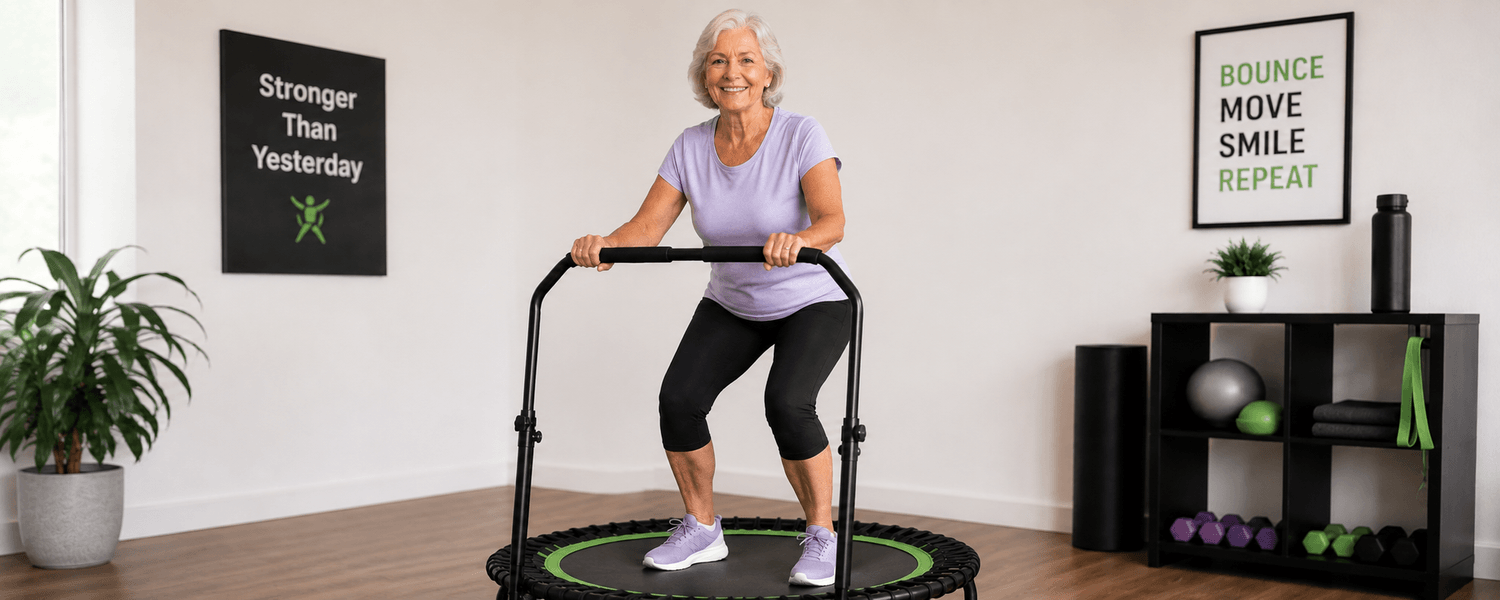
Rebounding: The Joint-Friendly Habit Worth its Own Spotlight
If you already have one of those mini trampolines tucked in a closet, or you've seen women bouncing gently on one and wondered what the appeal actually is, this is worth a real, honest look — because there's more substance here than the "wellness trend" packaging suggests.
Why it works. A 1980 NASA-funded study found something genuinely surprising: for the same oxygen cost, the body performs up to 68% more mechanical work bouncing on a rebounder than jogging, because the up-and-down motion engages muscle and connective tissue throughout your whole body with every single bounce, not just your legs.⁶ At the same time, a rebounder's give absorbs a large share of the impact — research estimates roughly 80% less force on your joints than running on pavement.⁶ Put simply: you get a genuinely efficient, whole-body workout without the pounding, which matters enormously if your knees, hips, or back aren't what they used to be.
What the research actually shows. A randomized controlled trial in older women with osteopenia had one group do a 12-week mini-trampoline program (balance, strength, and gentle jumping moves, twice a week) while a control group didn't — the rebounding group showed significant improvements in balance, functional mobility, gait speed, leg strength, and fear of falling.⁷ That last one matters more than it might sound: fear of falling on its own can quietly shrink a woman's world, making her less active and less confident, which becomes its own kind of risk. Worth knowing honestly, though: in that same study, the improvement in bone mineral density itself wasn't large enough to be statistically significant — so think of rebounding as a genuine win for balance, stability, and confidence in movement first, with any bone benefit as a possible bonus rather than a guarantee. It's best used alongside the resistance training above, not as a replacement for it.
The other benefits worth knowing. Rebounding is also commonly discussed for supporting lymphatic flow, since your lymphatic system doesn't have its own pump and relies on movement to circulate — the gentle, repetitive up-and-down motion is a plausible fit for that mechanism. This one is more theory than proven clinical result, so it's worth mentioning honestly rather than presenting it as settled science, but it's a reasonable, low-risk bonus to an already-worthwhile habit, not the main reason to do it.
Getting started. A few minutes a day is a completely reasonable starting point — you don't need to work up a sweat for this to count. Start with small, controlled bounces without your feet leaving the mat, holding onto a wall or stability bar if balance is a concern at first, and build up gradually from there. If you have a joint replacement, severe osteoporosis, or any balance condition, it's worth a quick check with your doctor or physical therapist before starting, simply to confirm it's a good fit for your specific situation.

Supporting Your Brain for the Long Run
Somewhere between a third and nearly two-thirds of women notice real memory and word-finding changes during this transition — and for some women, that fog lingers well into postmenopause. A few options are worth knowing about here, with real honesty about how strong the evidence actually is for each.
Omega-3 (DHA specifically). This one is foundational: DHA makes up roughly 40% of the fatty acids in your brain's cell membranes, making it one of the most directly brain-relevant nutrients on this entire list. If brain fog is a real priority for you right now, look for a fish oil where DHA makes up a meaningful share of the total omega-3 content, not just EPA.
Phosphatidylserine (often paired with DHA). A less well-known option with genuinely encouraging research: in a 15-week trial of older adults with real memory complaints, a phosphatidylserine-and-DHA combination significantly improved verbal recall compared to placebo.⁸ It's a reasonable option to consider specifically if word-finding and day-to-day recall are your main frustration, typically taken as a combination supplement alongside DHA rather than on its own.
Lion's mane. This one deserves an honest, balanced take rather than the enthusiasm you'll often see online. Lion's mane contains compounds that may stimulate nerve growth factor production, and small trials in adults over 50 — including some specifically in people with mild cognitive changes — have shown real improvements in cognitive testing.⁹ But the research is still early: trials have been small, results are mixed across different cognitive tests, and any benefits seem to fade once people stop taking it, meaning it likely needs to be a sustained, ongoing habit rather than an occasional supplement. Worth trying if brain fog is a real concern for you, but worth trying with realistic expectations rather than treating it as a proven fix.
Bacopa monnieri. An Ayurvedic herb with one of the longer research histories in this category, mostly studied for memory and attention. Some trials in older adults show real improvements in verbal learning and memory recall over 12 weeks, typically at 300mg/day of a standardized extract.¹⁰ Worth knowing honestly: results are inconsistent across studies — some show clear benefit, others show none beyond stress reduction — so this is genuinely a "may help, worth a real trial" option rather than a sure thing. It can cause mild stomach upset in some people, so taking it with food helps.
Ginkgo biloba. One of the most researched brain herbs out there, but the honest picture is genuinely mixed, especially for menopause specifically. Some research shows short-term improvements in attention and mental flexibility in postmenopausal women, but those benefits didn't hold up as clearly over longer use, and large studies in healthy older adults haven't shown it prevents cognitive decline.¹¹ At a standard dose of 120–240mg/day, it's generally considered safe, but given the mixed evidence, it's fair to think of this as one of the less certain options on this list — reasonable to try, but not one to expect dramatic results from. One caution: it can thin the blood slightly, so it's worth mentioning to your doctor if you're on any blood thinners.
Sage — more than a hot flash remedy. Sage contains compounds that may help preserve acetylcholine, a brain chemical involved directly in memory, and some research points to real neuroprotective effects tied to its estrogen-like activity — the same mechanism researchers think may help explain why declining estrogen after menopause is connected to rising Alzheimer's risk.¹² If you're already using sage for hot flashes, this is a nice example of one habit quietly supporting two things at once.
A quick, foundational check: B12 and folate. Before reaching for anything else on this list, this one is worth ruling out first, since it's simple to test and surprisingly common. One large study following over 7,000 postmenopausal women found that folate intake below the recommended daily amount was linked to roughly double the risk of mild cognitive impairment, independent of other factors.¹³ B12 deficiency specifically has also been tied to poorer attention and memory in older adults. This is worth ruling out with a simple blood test — ask your doctor for a B12 and folate panel, and if B12 comes back borderline, a methylmalonic acid or homocysteine test can give a clearer picture, since standard B12 tests can miss an early or borderline deficiency. It's worth checking before assuming you need a specialty brain supplement, since correcting an actual deficiency will do more for you than any herb on this list.
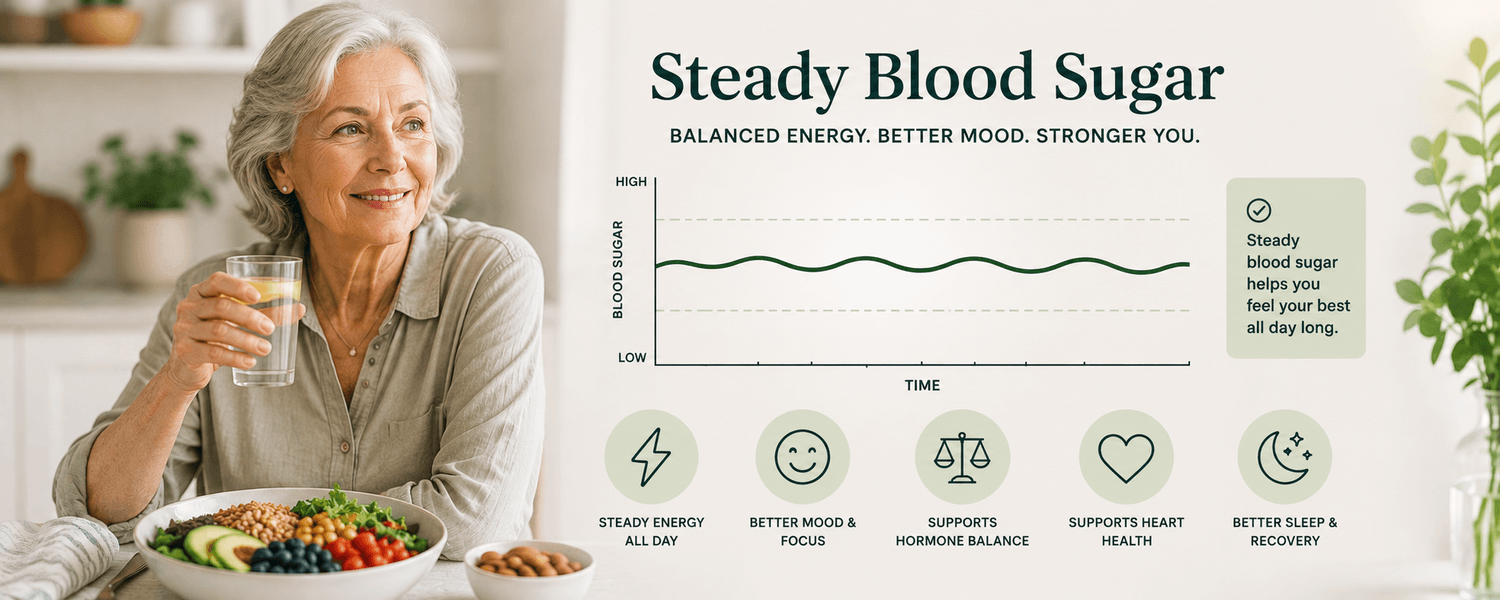
Keeping your Blood Sugar Steady
The postmenopause checklist already names blood sugar awareness as a daily, self-directed habit — noticing your own energy and cravings, and eating in response. Here's a real, natural toolkit to build on that awareness: a pantry staple, a couple of teas, and a tincture, each genuinely worth trying to help your body find its steady rhythm.
Apple cider vinegar. One of the simplest, most accessible options here, and genuinely research-backed. Taking 1–2 tablespoons diluted in a full glass of water about 15–30 minutes before a carbohydrate-heavy meal helps smooth out the after-meal blood sugar rise, likely by gently slowing how quickly your stomach empties.¹⁴ One well-known study found it improved insulin sensitivity by 19–34% in people with insulin resistance when taken before a high-carb meal.¹⁴ It's an easy ritual to build: start with a teaspoon in water and work up to a full tablespoon or two as you get used to it.
Mulberry leaf tea. A genuinely pleasant, easy habit to build around meals. Mulberry leaves contain a natural compound (1-deoxynojirimycin, or DNJ) that slows carbohydrate absorption in the gut, and research shows it measurably smooths out the after-meal blood sugar rise when enjoyed around mealtime.¹⁵ It's mild-tasting, easy to find, and one of the loveliest options here since you can simply fold it into a tea ritual you already enjoy.
Gymnema sylvestre. Traditionally called "sugar destroyer" in Ayurvedic medicine, and modern research backs up real reasons for that reputation — a meta-analysis of 10 controlled studies found meaningful improvements in fasting blood sugar, after-meal blood sugar, and HbA1c with regular use.¹⁶ This is a wonderful one to know about specifically in tincture form if capsules aren't your preference — a typical tincture dose is 1–3ml, taken two to four times a day, generally before meals. If you're already on a diabetes medication, it's worth a quick conversation with your doctor first, simply so your dosages work well together.
Fenugreek. A kitchen spice with real research behind it as a supplement, too — a meta-analysis of 26 randomized controlled trials found meaningful improvements in fasting blood sugar, after-meal blood sugar, and HbA1c.¹⁷ Typically taken as a seed extract, 500–1,000mg daily with meals. It's gentle, well-tolerated, and an easy one to layer in alongside the options above.
Berberine. For blood sugar support with some of the strongest research behind it in the plant world, this is genuinely worth knowing about. Research shows real, meaningful improvements in fasting blood sugar and insulin sensitivity, with studies in people with prediabetes showing measurable improvement after a few months of consistent use.¹⁸ Typical research doses run around 500mg, two to three times daily. Because it works so effectively, it's simply worth doing alongside your doctor if you're on any diabetes medication, so everything works together smoothly and you get the full benefit safely.
Comfort in Your Joints
Joint stiffness and achiness tend to become more noticeable in this stage, partly from the same estrogen loss affecting your bones and partly from years of wear.
Curcumin (from turmeric). The active compound in turmeric has real research behind it for joint comfort specifically. In one placebo-controlled trial in postmenopausal-stage women dealing with joint pain, a specialized curcumin formulation taken daily led to measurable improvement in joint pain and stiffness compared to placebo.¹⁹ Look for a formulation that includes black pepper extract (piperine) or a specialized absorption form — the label will usually say so directly — since that's what helps your body actually use it well. This pairs naturally with the collagen and omega-3 already covered in this library, since all three support joint comfort from slightly different angles.
Boswellia serrata. A resin used in traditional Ayurvedic medicine, and one of the genuinely well-studied options for joint comfort. Multiple randomized trials in people with knee osteoarthritis have found real improvements in pain, stiffness, and daily function, with one standardized extract showing noticeable improvement in as little as five days.²⁰ Doses in research have ranged from 100mg to 300mg twice daily, depending on the specific extract. A lovely option to pair alongside curcumin, since the two work through complementary anti-inflammatory pathways.
Glucosamine and chondroitin. A genuinely encouraging one for this exact stage of life: a study specifically in postmenopausal women found that those taking 1,500mg/day of glucosamine sulfate had no further narrowing of joint space over three years, while those on placebo did.²¹ A related study combining glucosamine (1,500mg/day) with chondroitin (1,200mg/day) in postmenopausal women found meaningful improvement in joint aches with minimal side effects.²¹ This is a wonderful long-game option — one to take consistently over months, aimed at supporting the joint itself, not just easing today's discomfort.
MSM (methylsulfonylmethane). A natural sulfur compound your body uses to help build and repair connective tissue. Randomized trials in people with knee osteoarthritis have shown real improvements in pain and quality of life, generally using doses between 2 and 6 grams a day.²² It's gentle, gets along well with the other options here, and pairs especially nicely with glucosamine — several studies have tested the two together with good results.
Tart cherry. A genuinely delicious way to support your joints. Tart cherries are rich in anthocyanins, the same compounds giving them their deep red color, and research shows they can meaningfully lower inflammation markers while easing pain and stiffness in knee osteoarthritis.²³ Effective doses in studies ranged from 8–16oz of tart cherry juice concentrate daily, or 500–1,000mg in capsule form — taken with a meal containing a little fat, since the beneficial compounds absorb better that way. This is one of those wonderful cases where something that tastes good is also genuinely doing real work for you.
Avocado-soybean unsaponifiables (ASU). A plant-based option extracted from avocado and soybean oils, generally taken at 300mg daily. Several randomized trials have found real improvement in osteoarthritis pain and function, particularly over a 3 to 6 month period — this is very much a patience-rewards-you option rather than a quick fix, so give it real time to work its magic.²⁴
For in-the-moment comfort. Alongside these daily habits, two simple, lovely rituals are worth having on hand for days your joints need a little extra care: a topical capsaicin cream (derived from chili peppers) applied to the area, which research shows can meaningfully ease joint pain by calming the pain signals in that specific spot — just expect a warming sensation as part of how it works, and wash your hands well after applying.²⁵ And a warm Epsom salt soak, 15–20 minutes, is a wonderfully relaxing ritual many women find genuinely soothing for achy joints — a beautiful way to end the day, whatever else is or isn't happening beneath the surface.

Where to Find Guided, Personalized Support
You don't have to figure any of this out alone, and you don't have to become an expert in bone density or hormone therapy to make good decisions here. A few people worth having in your corner:
Me ☺️ — a Certified Functional Nutrition Counselor. This stage is exactly where I love helping women build a plan that actually fits their real life — figuring out which of these options genuinely make sense for you, in what order, and how to build them into habits that stick for the long run. I'm not a doctor, and I don't diagnose or treat anything — this is root-cause, lifestyle-focused support that works alongside your medical care, not instead of it. If you'd like a steady, honest guide as you put these pieces together, you can sign up for a free consultation below.
A menopause-focused OB-GYN or certified menopause practitioner (look for NAMS/Menopause Society certification) is still worth having in your corner for this stage, especially for anything related to berberine and blood sugar medication, or ongoing bone and heart monitoring
A physical therapist or trainer experienced with older or postmenopausal women can help you learn safe form on the resistance training routine above before you start adding real weight — the exact habit that creatine and bone health both depend on
A registered dietitian can help you build blood sugar-steady, protein-forward eating patterns that reduce how much you need to lean on supplements like berberine in the first place
A pelvic floor physical therapist remains a great resource too, as covered in the menopause article, for ongoing vaginal and urogenital comfort
And as covered throughout this library: look for third-party tested supplement brands (NSF certification, or products reviewed by ConsumerLab), especially for something as active as berberine, gymnema, or creatine, so you know exactly what you're taking.
Here's What to Do
You don't need to add everything on this list at once — that would genuinely be overwhelming, and this stage rewards patience more than intensity. If preserving your strength and independence feels most urgent, start with plain creatine monohydrate (3–5g daily, skip the "advanced" forms) paired with two to three strength sessions a week — this is likely the single highest-impact addition in this entire article.
If your joints make traditional cardio or higher-impact movement hard, rebounding is a genuinely well-supported, gentle alternative worth adding in alongside it. If brain fog is your main frustration, start by ruling out a simple B12 or folate deficiency through the "Am I Deficient?" article, then build on omega-3 DHA as your foundation, with phosphatidylserine, lion's mane, bacopa, ginkgo, or the cognitive side of sageworth a real trial if you want to go further.
If blood sugar has become a real concern despite your daily habits, try apple cider vinegar before meals, a daily cup of mulberry leaf tea, or gymnema or fenugreek — genuinely helpful, natural options worth exploring, with berberine as another wonderful option to bring in alongside your doctor.
And if joint comfort is what you're after, a well-absorbed curcumin or boswellia formulation is a wonderful place to start, with glucosamine and chondroitin, MSM, tart cherry, and ASU all genuinely worth exploring too — plus a capsaicin cream or warm Epsom salt soak for the days you want a little extra comfort.
Keep using your Hormone & Cycle Pattern Tracker to notice what's actually shifting as you try any of these — your own data, over time, is still the most useful tool you have.
Whatever you choose to start with, this is genuinely the long game. You have decades ahead of you in this chapter, and the small, steady choices you make now are exactly what determine how strong, clear, and comfortable you feel in all of them.
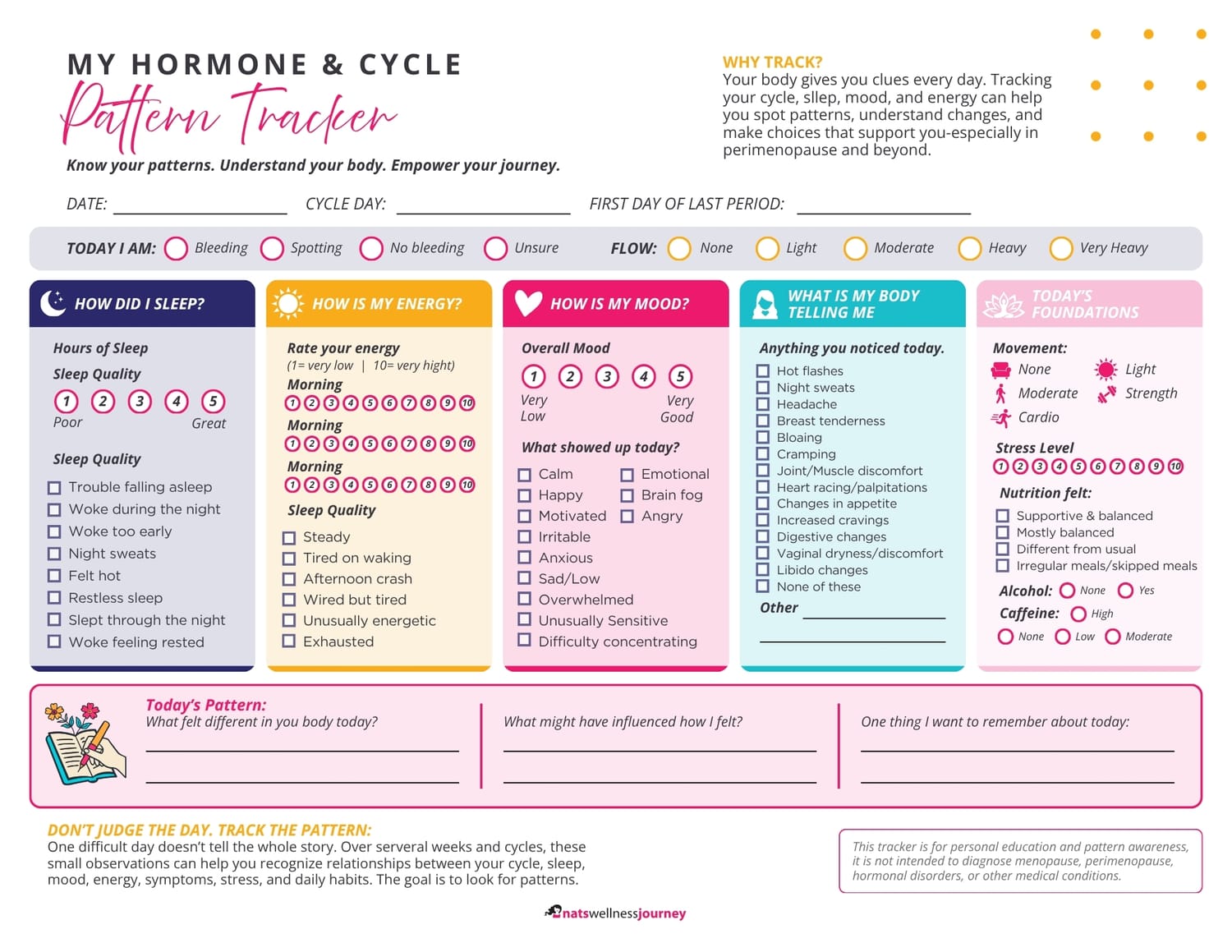
Get your FREE
Hormone & Cycle
Pattern Tracker
Enter your email above, click the button and you will be directed to where you can download the flier.
No spam ever, unsubscribe anytime.
This article is for educational purposes and isn't a substitute for personalized medical advice. Please talk with your doctor or pharmacist before starting any new supplement or therapy, especially if you take medication or have a history of hormone-sensitive or blood sugar-related conditions.
Sources
Creatine supplementation combined with resistance training and bone mineral density preservation in postmenopausal women: Creatine in Women's Health: A Lifespan Perspective — PMC
Creatine supplementation and effects on body composition, cognition, estrogen, strength, and sleep in menopausal women: Impact of Creatine Supplementation on Menopausal Women's Body Composition, Cognition, Estrogen, Strength, and Sleep — PMC
Creatine form comparison — buffered creatine shown inferior to monohydrate; HCl lacks comparable research base: A buffered form of creatine does not promote greater changes in muscle creatine content, body composition, or training adaptations than creatine monohydrate — PMC
Resistance training frequency, intensity, and sets/reps guidelines for bone mineral density in postmenopausal women: Comparative efficacy of different resistance training protocols on bone mineral density in postmenopausal women: A systematic review and network meta-analysis — PMC
Power training vs. traditional strength training for bone mineral density preservation in postmenopausal women: Power training is more effective than strength training for maintaining bone mineral density in postmenopausal women — Journal of Applied Physiology
Rebounding mechanical efficiency and reduced joint impact compared to running: Rebound Exercises in Rehabilitation: A Scoping Review — PMC
Mini-trampoline training program and improvements in balance, functional mobility, gait, strength, and fear of falling in older women with osteopenia: Effectiveness of a Mini-Trampoline Training Program on Balance and Functional Mobility, Gait Performance, Strength, Fear of Falling and Bone Mineral Density in Older Women with Osteopenia — PubMed
Phosphatidylserine and DHA combination for memory in older adults with memory complaints: Phosphatidylserine containing omega-3 fatty acids may improve memory abilities in non-demented elderly with memory complaints — PubMed
Lion's mane research summary and cognitive trial findings in adults over 50: Lion's Mane & Your Brain — Alzheimer's Drug Discovery Foundation, Cognitive Vitality
Bacopa monnieri randomized trial on memory performance in older adults: Does Bacopa monnieri improve memory performance in older persons? — Cochrane Library
Ginkgo biloba research on cognition in postmenopausal women and mixed long-term evidence: Limited cognitive benefits in Stage +2 postmenopausal women after 6 weeks of treatment with Ginkgo biloba — PubMed
Sage's neuroprotective mechanisms and estrogen-related cognitive effects: Neuroprotective Potential of Aromatic Herbs: Rosemary, Sage, and Lavender — Frontiers in Neuroscience
Folate intake and risk of mild cognitive impairment/dementia in postmenopausal women (Women's Health Initiative Memory Study): Folate, Vitamin B-6, and Vitamin B-12 Intake and Mild Cognitive Impairment and Probable Dementia in the Women's Health Initiative Memory Study — PubMed
Apple cider vinegar and postprandial glucose/insulin sensitivity research: Vinegar (acetic acid) intake on glucose metabolism: A narrative review — ScienceDirect
Mulberry leaf extract (DNJ) randomized controlled trial on postprandial glucose metabolism: Effects of the timing of acute mulberry leaf extract intake on postprandial glucose metabolism in healthy adults — PMC
Gymnema sylvestre systematic review and meta-analysis on glycemic control: The effect of Gymnema sylvestre supplementation on glycemic control in type 2 diabetes patients — Wiley
Fenugreek seed extract meta-analysis of 26 RCTs on glycemic parameters: The effects of fenugreek (Trigonella foenum-graecum) seed on glycemic parameters — PMC
Berberine randomized controlled trial on glycemic control in prediabetes: Efficacy and Safety of HIMABERB Berberine on Glycemic Control in Patients with Prediabetes — PMC
Curcumin randomized controlled trial on joint pain/arthralgia in postmenopausal-stage women: Randomized Placebo-Controlled Trial of Nanoemulsion Curcumin in Women with Aromatase Inhibitor-Induced Arthropathy — PMC
Boswellia serrata randomized controlled trials on knee osteoarthritis pain, stiffness, and function: A Standardized Boswellia Serrata Extract Shows Improvements in Knee Osteoarthritis Within Five Days — PMC
Glucosamine sulfate and glucosamine/chondroitin research specifically in postmenopausal women: Summary of Glucosamine and Chondroitin Studies — Arthritis-health
MSM randomized controlled trials on knee osteoarthritis pain and quality of life: Methylsulfonylmethane Improves Knee Quality of Life in Participants with Mild Knee Pain — PMC
Tart cherry research on inflammation markers and knee osteoarthritis symptoms: Tart Cherry Extract for Inflammation: Benefits and Evidence Explained — Performance Lab
Avocado-soybean unsaponifiables (ASU) systematic review and meta-analysis for osteoarthritis: Avocado-Soybean Unsaponifiables (ASU) for Osteoarthritis: A Systematic Review — PubMed
Topical capsaicin cream research for arthritis joint pain relief: Capsaicin Cream for Joint Pain — Arthritis-health
FREE Guide
Click on Picture 👉
Just starting Menopause or Past menopause?
Click on the one you currently are experiencing.

Hormones can begin fluctuating years before your period actually stops. You may notice changes in sleep, energy, mood, body composition, cycles, cravings, temperature regulation, or how you respond to stress.

Supporting the Body for the Decades Ahead
Once the menopausal transition is complete, the goal shifts again. This stage can become less about managing unpredictable hormonal swings and more about protecting long-term metabolic health, strength, mobility, cognition, cardiovascular health, and quality of life.

LOOKING FOR MORE PERSONALIZED SUPPORT?
You Don't Have to Figure It All Out Alone
If you've been trying to make sense of changing symptoms, energy, hormones, nutrition, or other wellness concerns, a conversation can help you organize what you're noticing and identify where you may want to focus next.

Start with a complimentary 20-minute connection call.
Let's see whether working together feels like the right fit.

Nat's Wellness Journey is a space for approachable wellness education, practical resources, and real-life learning to help women better understand their bodies and make informed choices about their health.
💌 natalie@natswellnessjourney.com
Credential & Certifications





© 2026 Nat's Wellness Journey. All Rights Reserved
Privacy Policy | Terms of Use | Disclosure | Health Disclaimer